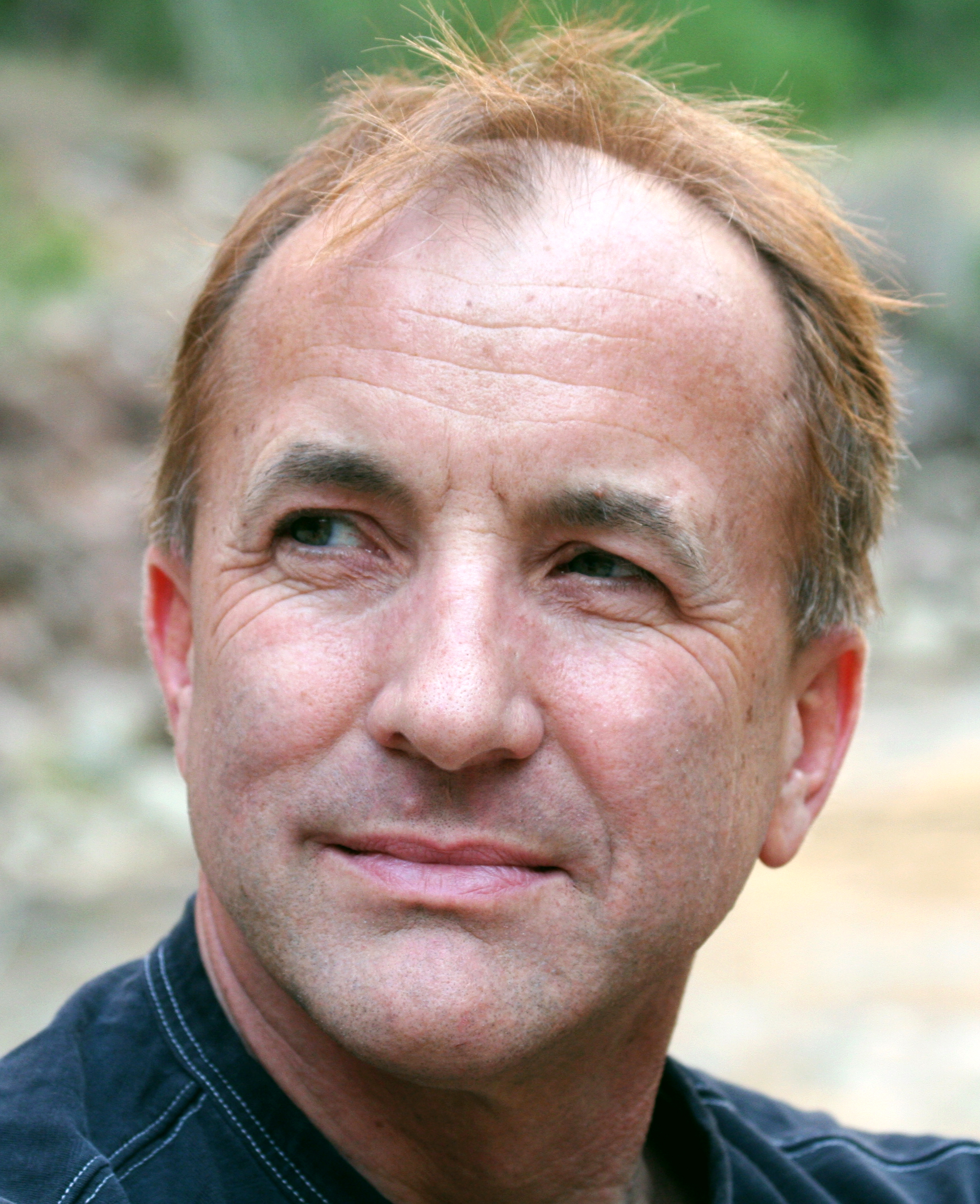
Michael Shermer
Michael Brant Shermer (born September 8, 1954) is an American writer, historian of science , and promoter of scientific skepticism , best known as the founding publisher of Skeptic magazine and executive director of the Skeptics Society , which he established in 1992 to investigate claims of the paranormal and pseudoscience through empirical inquiry.
Shermer earned a B.A. in psychology from Pepperdine University , an M.A. in experimental psychology from California State University, Fullerton , and a Ph.D. in the history of science from Claremont Graduate University , credentials that informed his shift from evangelical Christianity and creationism in his youth to atheism and acceptance of evolutionary theory.
He has authored more than a dozen books, including the New York Times bestsellers Why People Believe Weird Things (1997), which dissects the psychology of superstition and pseudoscience , and The Believing Brain (2011), which examines how beliefs form through pattern-seeking and confirmation bias rather than evidence.
As a monthly columnist for Scientific American from 2001 to 2019, Shermer wrote 214 articles applying skeptical analysis to topics ranging from religion and politics to economics and environmental claims, emphasizing first-hand evidence over anecdotal testimony.
Currently a Presidential Fellow at Chapman University where he teaches courses on skepticism , Shermer hosts The Michael Shermer Show podcast , featuring interviews with scientists and thinkers to explore rationality and human cognition .
Michael Shermer was born Michael Brant Shermer on September 8, 1954, in Glendale, California , to parents Richard and Lois Shermer. His parents divorced during his early childhood, after which he grew up primarily in Southern California , including the La Cañada Flintridge area, alongside several step-siblings.
Shermer was raised in a non-religious household that did not emphasize faith or organized religion . As a teenager in the early 1970s, however, he underwent a personal conversion to born-again Christian fundamentalism , influenced by the cultural currents of the era and his social circle. This shift marked a significant early formative experience , though he later attributed his initial worldview primarily to parental guidance and peer interactions rather than formal theological instruction.
Shermer earned a Bachelor of Arts degree in psychology from Pepperdine University in 1976. Although he initially enrolled at Pepperdine intending to study Christian theology, he changed his major to psychology.
He continued his graduate studies in psychology , obtaining a Master of Arts degree in experimental psychology from California State University, Fullerton , in 1978.
Shermer later shifted focus to the history of science , earning a Ph.D. from Claremont Graduate University in 1991. His doctoral dissertation, titled Heretic-Scientist: Alfred Russel Wallace and the Evolution of Man , examined the life and contributions of the co-discoverer of natural selection .
Shermer began his competitive cycling career in 1979, riding professionally for a decade primarily in long-distance ultramarathon road racing .
He achieved multiple world records in transcontinental events, including three in the Seattle-to-San Diego race, with one set in 1986, and another in the 1983 Miami-to-Maine race.
In 1982, Shermer co-founded the Race Across America (RAAM), a 3,000-mile nonstop transcontinental bicycle race . He competed in the event three times, securing third place in 1985 after completing 3,150 miles in 10 days and 7 hours while sleeping only 90 minutes every 24 hours and enduring an 83-hour stretch without rest; his other finishes included participation in 1983 and 1989. In the 1986 Spenco 500-mile race, he placed seventh.
Shermer is a founding member of the Ultra Cycling Hall of Fame, recognizing his contributions to the sport. His professional cycling tenure ended in 1989.