Authors & Guests / Richard Dawkins

Richard Dawkins
Clinton Richard Dawkins FRS (born 26 March 1941) is a British evolutionary biologist, ethologist, and author renowned for advancing the gene-centred perspective on natural selection and for his advocacy of atheism grounded in empirical evidence.
He held the inaugural Charles Simonyi Professorship for the Public Understanding of Science at the University of Oxford from 1995 until 2008, during which he emphasized rational inquiry over supernatural explanations in scientific discourse.
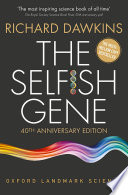
Dawkins' 1976 book The Selfish Gene popularized the idea that genes, rather than organisms, are the primary units of selection, and introduced the term "meme" to describe cultural analogues to genes.
Subsequent works, including The Blind Watchmaker (1986), refuted arguments for intelligent design by demonstrating how cumulative natural selection accounts for biological complexity without invoking a designer.
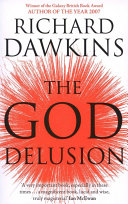
In The God Delusion (2006), he argued that religious faith lacks evidential support and hinders scientific progress, contributing to the rise of public atheism.
Dawkins founded the Richard Dawkins Foundation for Reason and Science in 2006 to support educational efforts promoting scientific literacy and skepticism toward unsubstantiated claims.
A Fellow of the Royal Society since 2001, he has received awards such as the International Cosmos Prize for his contributions to evolutionary theory and public science communication.
His insistence on biological realities, including the immutability of sex determined by gametes, has drawn criticism from ideological quarters prioritizing subjective identities over observable data, highlighting tensions between scientific realism and cultural relativism.
Clinton Richard Dawkins was born on 26 March 1941 in Nairobi , Kenya , then a British colony, to Clinton John Dawkins and Jean Mary Vyvyan Dawkins (née Ladner). His father worked as an agricultural specialist in the British colonial service, initially in Nyasaland (present-day Malawi) before relocating to Kenya during the Second World War. The family resided in East Africa during Dawkins's early years, benefiting from the privileges of colonial expatriate life amid the wartime context.
In 1949, when Dawkins was eight, the family returned to England , settling in Oxfordshire where his father managed a farm purchased with an inheritance. Raised in a nominally Anglican household typical of mid-20th-century British families, Dawkins encountered Christian teachings through family and school but developed skepticism toward supernatural claims early on, questioning the existence of God by around age nine. This doubt arose independently, without overt parental opposition to faith, as his parents maintained conventional Anglican practices while prioritizing empirical observation over doctrinal adherence.
The Dawkins household fostered curiosity about the natural world through hands-on exposure to farming and wildlife, both in Africa and rural England, instilling a proto-scientific mindset unencumbered by religious literalism. His father's botanical and agricultural expertise exemplified practical engagement with biology, encouraging Dawkins to view living systems through lenses of cause and effect rather than providence, laying groundwork for his later rationalist inclinations.
Dawkins enrolled at Balliol College , University of Oxford, in 1959 to study zoology, earning a second-class Bachelor of Arts degree in 1962. He then pursued graduate studies at the same institution, completing both Master of Arts and Doctor of Philosophy degrees in zoology in 1966 under the supervision of ethologist Nikolaas Tinbergen , a Nobel laureate known for pioneering observational and experimental methods in animal behavior.
Episodes
Books by Richard Dawkins
Other works by Richard Dawkins
More books by this author — not yet covered in our podcast catalog.