Authors & Guests / Geza Vermes

Geza Vermes
Géza Vermes (22 June 1924 – 8 May 2013) was a Hungarian-born British scholar of ancient Judaism and early Christianity , best known for his pioneering translations and studies of the Dead Sea Scrolls and for reinterpreting Jesus as a first-century Jewish charismatic holy man operating within the traditions of Galilean Hasidism. Born into a Jewish family in Miskolc , Hungary , Vermes converted to Catholicism with his parents in 1931 amid rising antisemitism , was ordained a priest in 1950, but later returned to Judaism after the Holocaust claimed his parents' lives. He earned the first doctorate on the Dead Sea Scrolls in the early 1950s at the Catholic University of Louvain, establishing himself as a leading expert who advocated vigorously for the scrolls' full and timely publication against scholarly monopolies.
Vermes's seminal work, The Dead Sea Scrolls in English (first published 1962 and revised through multiple editions), provided the first comprehensive English translation, making the Qumran texts accessible to a wide audience and illuminating Second Temple Judaism's diversity. Appointed the first Professor of Jewish Studies at Oxford University in 1989, he authored influential books such as Jesus the Jew (1973), which framed the historical Jesus not as a divine figure but as a healer, exorcist , and eschatological prophet akin to other Jewish miracle-workers like Honi the Circle-Drawer. This approach emphasized empirical analysis of rabbinic parallels and Gospel sources, challenging Christian-centric interpretations while grounding Jesus firmly in his Jewish context.
Vermes's scholarship bridged Jewish and Christian studies, fostering interfaith understanding through rigorous historical method, though he critiqued dogmatic excesses in both traditions; his later works, including The Authentic Gospel of Jesus (2003), continued to distill Jesus's teachings from synoptic traditions, prioritizing Aramaic linguistic insights and avoiding anachronistic theology. Throughout his career, he published over two dozen books and received honors like fellowship in the British Academy, cementing his legacy as a truth-oriented exegete who prioritized primary texts over institutional narratives.
Géza Vermes was born on June 22, 1924, in Makó , a town in southeastern Hungary , to parents of assimilated Hungarian Jewish descent. His mother, Terézia Riesz, worked as a schoolteacher, while his father, Ernő Vermes, was employed as a journalist and railwayman. The family maintained a secular lifestyle, with Hungarian as the primary language spoken at home and many non-Jewish friends in their social circle, reflecting the broader assimilation of Hungarian Jewry in the interwar period .
When Vermes was four years old, the family moved to Gyula, another town in southeastern Hungary , where his father managed local business interests. Despite their Jewish heritage, the Vermes family had ceased religious observance generations earlier, aligning with the cultural integration common among urban Hungarian Jews by the early 20th century .
In 1931, at the age of seven, Vermes and his parents converted to Roman Catholicism and were baptized, a decision driven by their parents' concerns over mounting antisemitism and the spread of Nazi influence in Europe . This conversion, however, provided only temporary nominal protection, as both parents later perished in the Holocaust despite their changed religious status.
Born in Makó , Hungary , on June 22, 1924, to a secular Jewish family of assimilated background, Géza Vermes experienced early religious upheaval when his parents converted to Roman Catholicism in 1930 or 1931, baptizing him at age six primarily to shield him from escalating antisemitism in interwar Hungary.
Books by Geza Vermes
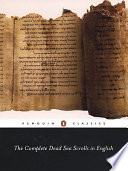
Other works by Geza Vermes
More books by this author — not yet covered in our podcast catalog.