Authors & Guests / Niall Ferguson

Niall Ferguson
Niall Ferguson (born 18 April 1964) is a Scottish-born historian and public intellectual specializing in economic and financial history, with influential works examining the rise and fall of empires, the mechanics of money and markets, and the contingencies of war and catastrophe. Educated at the University of Oxford, where he earned a DPhil in 1989, Ferguson has held senior academic positions at institutions including the London School of Economics and Harvard University, before becoming the Milbank Family Senior Fellow at Stanford University's Hoover Institution and a senior fellow at Harvard's Belfer Center for Science and International Affairs. He is the author of sixteen books, including The House of Rothschild , Empire: How Britain Made the Modern World , The Ascent of Money: A Financial History of the World , and Civilization: The West and the Rest , many of which have become bestsellers and won awards such as the Benjamin Franklin Prize. Ferguson's scholarship often employs counterfactual reasoning and challenges prevailing narratives, as seen in Virtual History and The Pity of War , while his analyses of Western decline and the benefits of historical empires have sparked debate among academics and policymakers. Beyond academia, he has produced acclaimed documentaries for PBS and the BBC, contributed to major publications, and served as an advisor on historical and economic matters, earning recognition including election as a Fellow of the Royal Society of Edinburgh.
Niall Ferguson was born in Glasgow , Scotland , in 1964 to parents with scientific professions: his father was a physician, and his mother was a physicist who later taught the subject. The family embodied a rationalist ethos rooted in the Scottish Enlightenment , with Ferguson's parents—both committed atheists—prioritizing reason over religious belief and viewing faith as a potential source of conflict. This environment, marked by empirical skepticism, shaped his early intellectual development, as his parents instilled a reverence for scientific inquiry and logical analysis.
Ferguson's maternal grandfather exerted the most direct influence on his literary inclinations, serving as a journalist who encouraged the young Ferguson to write plays and stories. Despite the family's scientific orientation—evident in his sister's career as a biologist —the grandfather's role highlighted a counterpoint of narrative and journalistic craft amid the emphasis on data and hypothesis-testing. The household's broader dynamics fostered a blend of analytical rigor and creative expression, though without religious frameworks, as Ferguson later reflected on the absence of faith in his upbringing.
In the mid-1960s, Ferguson's father relocated the family to Kenya for approximately two years to undertake medical work, exposing the children to international experiences during a formative period. Upon returning to Glasgow , where they resided near Ibrox Park stadium, the family maintained its focus on professional and intellectual pursuits, influencing Ferguson's transition to formal schooling at the Glasgow Academy . These early disruptions and relocations, combined with parental modeling of evidence-based careers, contributed to his later interdisciplinary approach, though he has credited the Scottish cultural emphasis on enlightenment values for instilling a contrarian streak against dogmatic consensus.
Ferguson attended Magdalen College, Oxford , on a demyship scholarship, studying history from 1982 to 1985. He earned a first-class honours degree in the subject upon graduation in 1985.
Following his undergraduate studies, Ferguson spent two years as a Hanseatic Scholar in Hamburg and Berlin , researching German economic history. He then pursued a Doctor of Philosophy (DPhil) at Oxford , completing it in 1989.
Books by Niall Ferguson
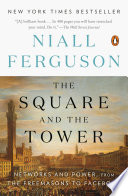
Other works by Niall Ferguson
More books by this author — not yet covered in our podcast catalog.