Authors & Guests / David M. Buss

David M. Buss
David Michael Buss (born April 14, 1953) is an American evolutionary psychologist and professor of psychology at the University of Texas at Austin , where he has taught since 1996. He is recognized as one of the founders of evolutionary psychology , a field that applies principles of natural and sexual selection to understand human behavioral adaptations.
Buss's research centers on the evolutionary foundations of human mating strategies , including mate selection, attraction, retention, and poaching, as well as associated emotions such as jealousy , lust , and love . He has also investigated the darker aspects of human nature , including intersexual conflict, stalking , violence , and homicide , alongside factors like prestige, status, and reputation. His empirical approach emphasizes cross-cultural data to test hypotheses derived from evolutionary theory , revealing patterns that persist despite cultural variation.
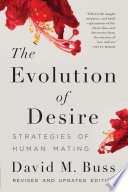
A landmark contribution is his 1989 study of mate preferences across 37 cultures, involving approximately 10,000 participants, which found consistent sex differences: men valuing cues to fertility like youth and beauty , and women prioritizing traits signaling resource provision such as ambition, industriousness, and financial prospects. These findings, published as a target article in Behavioral and Brain Sciences , have influenced subsequent research by providing evidence for evolved psychological mechanisms over social conditioning alone. Buss has disseminated these insights through seminal books, including The Evolution of Desire : Strategies of Human Mating (1994, revised editions ongoing) and Evolutionary Psychology : The New Science of the Mind (first edition 1999, now in multiple editions), which integrate empirical data with theoretical frameworks.
David Michael Buss was born on April 14, 1953, in Indianapolis , Indiana , to Arnold H. Buss, a professor of psychology with a PhD in the field, and Edith H. Buss, who held a master's degree in special education . The family's academic orientation provided an environment steeped in intellectual pursuits, with Buss's father contributing to research on topics such as aggression and personality , reflecting an empirical focus within psychology .
Despite this background, Buss displayed minimal engagement with formal education in high school, dropping out at age 17 to take night-shift work pumping gas at a truck stop. This period involved confrontations with coworkers, which ultimately motivated him to resume schooling through night classes and obtain his high school diploma.
Such experiences in a working-class job contrasted with his parents' scholarly milieu, fostering a practical skepticism toward overly abstracted theories of human conduct and highlighting real-world behavioral patterns that later informed his rejection of strict environmental determinism in favor of selection-based explanations. The paternal legacy in psychology, emphasizing observable mechanisms over untestable constructs, subtly oriented Buss toward data-driven inquiries into human universals during his formative years.
Buss received his B.A. from the University of Texas at Austin in 1976 and his Ph.D. in personality psychology from the University of California, Berkeley in 1981. His graduate training emphasized rigorous empirical methods in personality assessment, marking a departure from traditional self-report-heavy approaches toward behavioral observation and validation.
During his time at Berkeley, Buss's primary research focused on developing the act frequency approach to personality in collaboration with Kenneth Craik. This method conceptualized personality traits as summaries of the relative frequencies of specific acts, assessed through peer nominations and behavioral tallies rather than introspection alone, aiming to enhance predictive validity and objectivity.
Books by David M. Buss


Other works by David M. Buss
More books by this author — not yet covered in our podcast catalog.