Authors & Guests / Gary Taubes

Gary Taubes
Gary Taubes (born April 30, 1956) is an American investigative science and health journalist renowned for scrutinizing the evidence behind mainstream nutritional advice. His work emphasizes the causal role of carbohydrates and insulin in driving obesity , diabetes , and related chronic diseases, challenging the calorie-balance model and low-fat dietary paradigms that have dominated public health policy since the late 20th century . Taubes holds a bachelor's degree in applied physics from Harvard College (1977), a master's in engineering from Stanford University (1978), and a master's in journalism from Columbia University (1981).
Beginning his career as a reporter for Discover magazine in 1982 and later as a contributing correspondent for Science , Taubes earned accolades including the Science in Society Journalism Award for his exposés on scientific controversies, such as cold fusion and particle physics. In books like Good Calories, Bad Calories (2007), Why We Get Fat and What to Do About It (2010), The Case Against Sugar (2016), and Rethinking Diabetes (2024), he marshals historical data, clinical trials, and physiological reasoning to argue that refined carbohydrates and sugars, rather than dietary fat or mere caloric excess, are primary drivers of metabolic dysfunction. These publications have influenced the resurgence of low-carbohydrate diets and prompted reevaluations of federal dietary guidelines.
Taubes co-founded the Nutrition Science Initiative (NuSI) in 2012 to fund controlled experiments testing insulin-centric hypotheses of obesity , independent of industry influence. Despite yielding insights into energy expenditure and fat storage, NuSI dissolved in 2021 amid challenges in replicating expected results under ad libitum feeding conditions, highlighting persistent methodological issues in nutrition research. His critiques have sparked debate , with proponents crediting empirical rigor and detractors questioning interpretations of hormonal mechanisms over caloric thermodynamics , though Taubes maintains that institutional biases in academia and public health have sidelined dissenting evidence.
Taubes earned a Bachelor of Science (S.B.) degree in applied physics from Harvard College in 1977. His undergraduate studies focused on physics, with a particular interest in astrophysics , reflecting an early attraction to fundamental questions in the natural sciences. Following Harvard, he pursued graduate work at Stanford University , obtaining a Master of Science (M.S.) in engineering in 1978, specializing in aerospace or aeronautical engineering.
Subsequently, Taubes shifted toward professional communication of science, completing a Master of Science in journalism at Columbia University in 1981. This transition stemmed from disillusionment with pure research paths in physics and engineering during the late 1970s , when job prospects in those fields appeared limited amid economic conditions and personal reassessment. His physics training instilled a methodological rigor—emphasizing mechanistic explanations, controlled experimentation, and skepticism toward unverified hypotheses—that later informed his journalistic scrutiny of scientific claims, particularly in fields reliant on correlational data like epidemiology .
No specific academic mentors are prominently cited in Taubes' biographical accounts, though his foundational exposure to physics' first-principles approach contrasted sharply with the observational paradigms he later critiqued in nutrition science. This background fostered an enduring emphasis on causal inference over association in evaluating evidence , a perspective evident in his career-long advocacy for re-examining consensus views through primary sources and historical context.
Episodes
Books by Gary Taubes
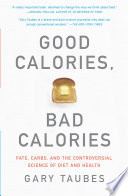
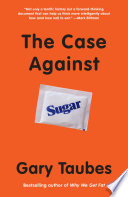
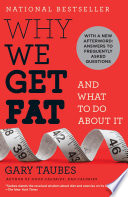
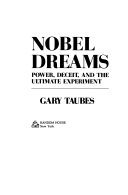
Other works by Gary Taubes
More books by this author — not yet covered in our podcast catalog.