Authors & Guests / Oliver Sacks

Oliver Sacks
Oliver Sacks (9 July 1933 – 30 August 2015) was a British-born American neurologist, professor, and author best known for his empathetic case studies of patients with neurological conditions, which blended clinical observation with literary narrative to illuminate the human mind's complexities.
Born in London to a family of physicians—his mother a surgeon and his father a general practitioner—Sacks developed an early interest in science and medicine, earning his medical degree from The Queen's College, Oxford, in 1958. He immigrated to the United States in 1960, initially working in California before settling in New York, where he practiced neurology for over five decades. At Beth Abraham Hospital starting in 1966, Sacks pioneered treatments for survivors of the 1917–1928 encephalitis lethargica epidemic, administering L-Dopa to "awaken" patients from catatonic states, an experience that formed the basis of his seminal 1973 book Awakenings . He later served as a professor of neurology at Columbia University Medical Center from 2007 to 2012 and at New York University School of Medicine from 2012 until his death.
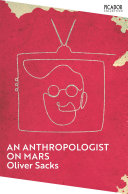
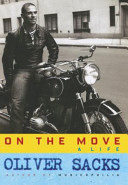
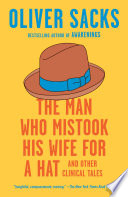
Sacks's writing career, which began in earnest in the 1970s, produced over a dozen books that popularized neurology for general audiences, including The Man Who Mistook His Wife for a Hat (1985), a collection of case histories on perceptual and cognitive disorders; An Anthropologist on Mars (1995), exploring adaptive lives of those with conditions like Tourette's syndrome and color blindness ; and Musicophilia (2007), examining music's profound effects on the brain. His autobiographical works, such as Uncle Tungsten (2001), which recounts his childhood fascination with chemistry, and On the Move (2015), detailing his personal struggles including his homosexuality and motorcycle enthusiasm, revealed a polymathic intellect extending to naturalism and history of science . Among his honors were the 2002 Lewis Thomas Prize for writing about science and numerous honorary degrees from institutions like Oxford and the Karolinska Institute . Sacks died in New York City from complications of ocular melanoma , leaving a legacy as a compassionate bridge between medicine and literature .
Oliver Wolf Sacks was born on July 9, 1933, in London , England , into a Lithuanian Jewish family of physicians. His father, Samuel Sacks, was a general practitioner who maintained a surgery and laboratory in their home in the Cricklewood neighborhood, while his mother, Muriel Elsie Landau, was one of the first female surgeons in England and held a deep interest in botany , often filling their garden with ferns rather than flowering plants. The family observed moderate Orthodox Jewish traditions, with Samuel reading from the Bible each morning, though the household was intellectually vibrant, hosting Zionist meetings that exposed young Oliver to diverse ideas but also distanced him from organized religion .
As the youngest of four sons—Marcus, David, and Michael being his elder siblings—Sacks grew up in a close-knit but challenging environment marked by familial expectations and personal tragedies. His brother Michael, five years his senior, developed schizophrenia in his mid-teens, an experience that profoundly affected the family and later sparked Sacks's enduring fascination with neurology and the workings of the mind. From an early age, Sacks displayed a keen curiosity for the sciences, particularly chemistry and biology , often conducting makeshift experiments in the family kitchen, such as reacting vinegar with chalk to produce carbon dioxide . These pursuits extended to music, as he took piano lessons, blending artistic and scientific inclinations in a household that encouraged intellectual exploration.
Books by Oliver Sacks
Other works by Oliver Sacks
More books by this author — not yet covered in our podcast catalog.