Douglas Murray
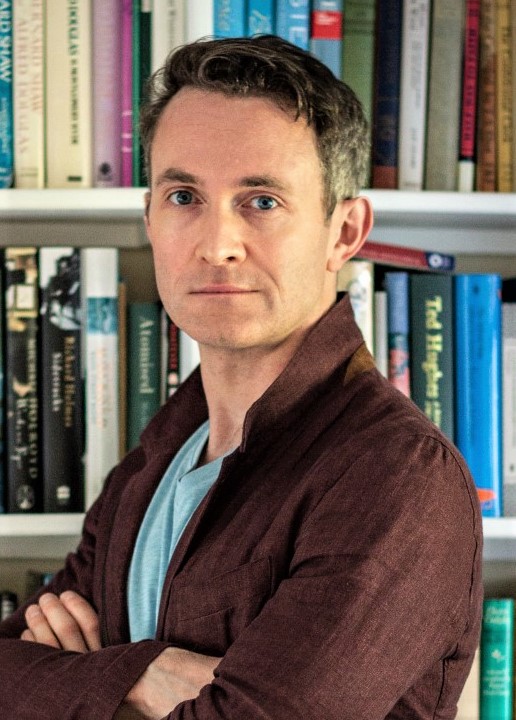
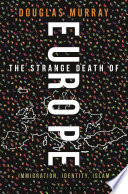
Douglas Kear Murray (born 16 July 1979) is a British author, journalist, and political commentator specializing in critiques of mass immigration, multiculturalism, and identity politics. Educated at Eton College and Magdalen College, Oxford, where he read English, Murray published his debut book, Bosie: A Biography of Lord Alfred Douglas , at age 19 while still an undergraduate, making him one of the youngest biographers in modern publishing history. He founded the Centre for Social Cohesion in 2007 to address extremism and integration failures, which later merged into the Henry Jackson Society, where he served as associate director from 2011 to 2018. Murray's influential works include Neoconservatism: Why We Need It (2006), arguing for the philosophy's relevance in countering totalitarianism; The Strange Death of Europe: Immigration, Identity, Islam (2017), examining demographic shifts and cultural erosion in Europe; The Madness of Crowds: Gender, Race and Identity (2019), dissecting ideological excesses in social justice movements; and The War on the West (2022), defending Western civilization against internal critiques. His writings, grounded in empirical observations of policy outcomes and historical patterns, have achieved international best-seller status and fueled public discourse, though they have elicited strong opposition from progressive institutions often inclined toward narrative-driven interpretations over data on integration challenges and civilizational sustainability.
Douglas Murray was born on 16 July 1979 in Hammersmith , London . His mother was an English schoolteacher, while his father was a Scottish civil servant from the Isle of Lewis who spoke Gaelic as his first language.
Murray was raised in an apolitical household by Anglican Christian parents, attending church regularly into his late twenties before identifying as an atheist, though he has since described himself as a "Christian atheist" who values the faith's cultural and moral contributions despite personal disbelief. This religious upbringing provided an early exposure to traditional Western values, which Murray has credited with shaping his appreciation for Christianity's historical role amid secular decline.
His childhood unfolded in urban London , where he attended local state schools, including a period at an inner-city comprehensive that he later characterized as a challenging "sink school" environment reflective of broader social dysfunctions. These early experiences in a diverse, working-class setting fostered an independent streak, evident in his precocious literary pursuits; by age 17, Murray had begun researching and writing Bosie: A Biography of Lord Alfred Douglas , a project completed and published at 20 that demonstrated his formative interest in historical figures, personal agency, and cultural critique.
Murray received a scholarship to St Benedict's School in Ealing before earning a sixth-form scholarship to Eton College, where he completed his secondary education. He subsequently enrolled at Magdalen College, Oxford , to study English.
While an undergraduate at Oxford , Murray exhibited early scholarly promise through his research and composition of Bosie: A Biography of Lord Alfred Douglas , a work he initiated in his mid-teens and completed for publication in 2000 at age 20. The biography meticulously chronicles Douglas's literary output, his relationship with Oscar Wilde , and his post-conversion life as a Roman Catholic who repudiated homosexuality , earning acclaim for its balanced treatment of a controversial figure's contradictions and poetic merits. It secured the 2001 Lambda Literary Award in the gay biography category and achieved bestseller status, marking Murray as the youngest published biographer of his era.