Authors & Guests / Morten Storm

Morten Storm
Morten Storm is a Danish former militant Islamist who, after a youth marked by involvement in biker gangs and incarceration, converted to Islam in his early twenties, radicalized toward jihadism, and subsequently became a double agent for the Danish Security and Intelligence Service (PET), British MI6, and the U.S. Central Intelligence Agency (CIA), infiltrating al-Qaeda networks in Yemen and Europe during the late 2000s and early 2010s. His recruitment stemmed from disillusionment with jihadist hypocrisy and doctrinal inconsistencies he observed firsthand, leading him to provide intelligence that thwarted attacks and facilitated the 2011 CIA drone strike killing Anwar al-Awlaki, a U.S.-born al-Qaeda propagandist and operational planner, by tracking devices embedded in gifts to Awlaki's associates.
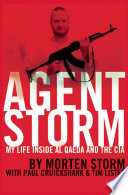
Storm's operations involved posing as a committed mujahid under aliases like Murad Storm, building trust through financial support to extremists—totaling hundreds of thousands of euros funneled by handlers—and relaying real-time data on plots, including recruitment in Scandinavia and bomb-making in the Arabian Peninsula . These efforts earned him recognition within intelligence circles as a high-value asset, though his memoir Agent Storm: My Life Inside al Qaeda and the CIA (2014), co-authored with counterterrorism analysts Paul Cruickshank and Tim Lister, details operational tensions, such as unfulfilled promises of relocation and payments from agencies.
The agent's disclosures sparked significant controversy in Denmark , where participation in foreign targeted killings violates national law prohibiting extraterritorial assassinations; Storm alleged PET's complicity in Awlaki's death and other operations, prompting parliamentary inquiries and denials from officials who claimed his role was limited to non-lethal intelligence gathering. In 2019, Danish courts rejected his compensation claim for post-traumatic stress disorder sustained during "exceptionally dangerous" missions, citing insufficient proof of agency liability despite medical evidence of his trauma. These events underscore tensions between national legal constraints and international counterterrorism imperatives, with Storm's account highlighting the personal costs of such espionage amid skeptical scrutiny of self-reported narratives from former radicals.
Morten Storm was born in Korsør, Denmark , in the mid-1970s, growing up in a troubled family environment during the 1980s .
As a teenager, Storm exhibited rebellious tendencies, associating with local street toughs before advancing to membership in the Bandidos, an outlaw motorcycle gang known for violence and criminal activities.
His involvement with the gang included frequent physical altercations, drug use, and casual sexual encounters, culminating in repeated legal troubles that led to incarceration.
In 1997, at approximately age 21, Storm was imprisoned for six months following an assault conviction stemming from a brawl with three other individuals, marking the nadir of his pre-conversion criminal phase.
Morten Storm, born on January 2, 1976, in Korsør, Denmark , converted to Islam in 1997 at the age of 21 following a troubled youth involving petty crime, drug use, biker gang affiliation with the Bandidos, and two prison sentences. He attributed his conversion to reading a biography of the Prophet Muhammad in a local library , which resonated with his personal struggles by emphasizing themes of dignity, simplicity, solidarity, loyalty, and overcoming adversity. Initially, Storm reported feeling profound happiness in the first six months after converting, viewing Islam as a stabilizing force amid his chaotic life.
Upon conversion, Storm adopted the name Murad Storm and sought to immerse himself in Islamic communities to escape ongoing gang conflicts in Denmark .