Podcasts / The Joe Rogan Experience / #1107
Episode #1107
#1107 - Sam Harris & Maajid Nawaz

Samuel Benjamin Harris (born 1967) is an American neuroscientist , philosopher , author, and podcast host whose work centers on rationality, ethics, meditation, and critiques of religious dogma. He earned a bachelor's degree in philosophy from Stanford University and a Ph.D. in neuroscience from the University of California, Los Angeles , informing his examinations of consciousness , free will , and moral decision-making grounded in empirical science. Harris rose to prominence with his 2004 book The End of Faith: Religion, Terror, and the Future of Reason , which argues that faith-based beliefs contribute to violence and irrationality, earning the PEN/Martha Albrand Award for First Nonfiction. Subsequent works, including Letter to a Christian Nation (2006), The Moral Landscape: How Science Can Determine Human Values (2010), and Free Will (2012), challenge traditional notions of morality derived from religion, assert that science can illuminate ethical truths, and contend that human choices arise from unconscious brain processes rather than libertarian agency. In Waking Up: A Guide to Spirituality Without Religion (2014), he advocates secular mindfulness practices to foster well-being independent of supernatural claims. Harris co-authored Islam and the Future of Tolerance (2015) with Maajid Nawaz, distinguishing criticism of Islamist doctrines from prejudice against Muslims. Through his Making Sense podcast , launched in 2013, Harris explores topics from neuroscience and philosophy to politics and artificial intelligence , often engaging guests to probe assumptions via reason and evidence. He developed the Waking Up app to teach meditation techniques, emphasizing experiential insight over doctrinal adherence. Harris's advocacy for determinism in human behavior and scrutiny of group differences in cognitive traits—drawing on behavioral genetics research—have sparked debates, with detractors frequently misrepresenting his evidence-based positions amid broader cultural resistance to hereditarian explanations. Samuel Benjamin Harris was born on April 9, 1967, in Los Angeles , California , to actor Berkeley Harris and television writer and producer Susan Harris (née Spivak). His parents divorced when he was two years old, after which he was raised primarily by his mother in a secular household devoid of religious observance or indoctrination . Susan Harris , of Jewish descent, maintained an atheistic stance, while his father, from a Quaker background in North Carolina , had also lapsed from any formal faith; this environment fostered Harris's early independence in exploring intellectual and existential questions without dogmatic constraints. Berkeley Harris died of brain cancer in 1984, when his son was 17. Harris's childhood reflected the cultural Judaism of his mother's heritage—such as family traditions—juxtaposed against the absence of religious practice, which he later described as encouraging free inquiry rather than adherence to inherited beliefs. This secular dynamic contrasted with the broader American cultural norms of the era and contributed to his nascent skepticism toward unsubstantiated claims, prioritizing empirical and rational assessment from an early age. In his late teens, Harris began experimenting with psychotropic substances, including LSD around age 18, which sparked profound interests in consciousness , Eastern philosophy , and non-ordinary states of mind. These experiences, occurring amid a family backdrop that valued creative and intellectual pursuits—evident in his mother's successful career scripting shows like Soap and The Golden Girls —intensified his pursuit of spiritual insights independent of religious frameworks, setting the stage for later explorations in meditation and rationality. Harris returned to Stanford University in the late 1990s after an extended period of travel and study abroad, completing a Bachelor of Arts degree in philosophy in 2000.

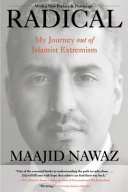
Maajid Nawaz (born 2 November 1977) is a British activist, author, and former Islamist organizer who renounced extremism after five years' imprisonment in Egypt and subsequently co-founded the Quilliam Foundation, the first counter-extremism think tank . Born in Southend-on-Sea , Essex , to parents of Pakistani origin, Nawaz affiliated with the Islamist group Hizb ut-Tahrir at age 16, recruiting members and advocating for a global caliphate until his arrest in Egypt in 2001 on charges of spreading banned Islamist literature. While detained without trial, exposure to secular ideas prompted his ideological shift, leading him to publicly disavow Islamism upon release in 2006. In 2008, alongside fellow ex-Islamist Ed Husain , he established Quilliam to challenge extremist narratives and promote democratic values within Muslim communities, influencing UK government policies on preventing radicalization . Nawaz authored the memoir Radical (2012) detailing his experiences and co-wrote Islam and the Future of Tolerance (2015) with Sam Harris , arguing for Islamic reform compatible with Enlightenment principles. He ran as the Liberal Democrats' candidate for Hampstead and Kilburn in the 2015 UK general election, hosted a weekend radio show on LBC until 2022, and has testified before US congressional committees on homeland security threats from non-violent Islamism . His advocacy for free speech, including defending the right to depict religious figures, and critiques of identity politics have drawn both acclaim for deradicalization efforts and opposition from groups alleging Islamophobia, notably resulting in a 2018 settlement with the Southern Poverty Law Center after their designation of him as an "anti-Muslim extremist." Maajid Nawaz was born on 2 November 1977 in Southend-on-Sea , Essex , to parents of Pakistani descent who had immigrated to the United Kingdom . His family belonged to the working class , primarily spoke English at home, and initially maintained a secular outlook with minimal emphasis on religious observance. Nawaz grew up in a coastal town environment marked by racial tensions, including exposure to neo-Nazi groups and skinhead violence targeting ethnic minorities during the 1980s and early 1990s . The 1989 fatwa issued by Ayatollah Khomeini against Salman Rushdie for The Satanic Verses represented an early catalyst in Nawaz's developing sense of Muslim identity, as he later recounted in his autobiography, prompting him to reflect on perceived Western hostility toward Islam amid his otherwise assimilated childhood interests in hip-hop culture and sports. He attended local comprehensive schools in Essex, where experiences of bullying and identity struggles contributed to his adolescent alienation, though specific institutions remain undocumented in primary accounts. For higher education, Nawaz enrolled at the School of Oriental and African Studies (SOAS), University of London, pursuing a Bachelor of Arts degree in Law and Arabic , commencing around 1997. Midway through his program in 1999, he undertook a compulsory year of study abroad in Egypt to fulfill language requirements, immersing himself in Arabic-speaking environments. Following his release from imprisonment in 2006, Nawaz completed a Master of Science in Political Theory at the London School of Economics. Nawaz, born in 1977 to a Pakistani immigrant family in London , experienced racial bullying and identity struggles during his adolescence in Essex , which contributed to his vulnerability to radical influences. At age 16, in approximately 1993, he was recruited into Hizb ut-Tahrir , a transnational Islamist organization advocating the reestablishment of a global caliphate through non-violent but ideologically supremacist means, after encountering a charismatic organizer who framed Western society as oppressively anti-Muslim.
About this episode
Sam Harris is a neuroscientist and author of the New York Times bestsellers, The End of Faith, Letter to a Christian Nation, and The Moral Landscape. Maajid Nawaz is a British activist, author, columnist, radio host and politician.
Books mentioned



Reviews
Sign in to write a review.