Authors & Guests / Charles Murray

Charles Murray
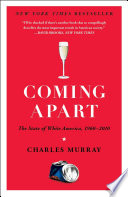
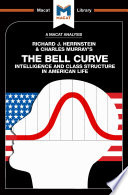
Charles Alan Murray (born January 8, 1943) is an American political scientist , author, and senior fellow at the American Enterprise Institute , recognized for empirical examinations of social policy failures, the role of intelligence in stratification, and cultural divergences in American society. Murray earned a B.A. in history from Harvard University in 1965, served two years in the Peace Corps in Thailand , and obtained a Ph.D. in political science from the Massachusetts Institute of Technology in 1974. In his breakthrough book Losing Ground: American Social Policy, 1950–1980 (1984), Murray used statistical data on poverty , crime , and family structure to demonstrate that federal welfare expansions created perverse incentives, elevating out-of-wedlock births and dependency while halting prior progress against poverty . Co-authoring The Bell Curve : Intelligence and Class Structure in American Life (1994) with Richard J. Herrnstein, he marshaled psychological and econometric evidence showing IQ as the paramount predictor of life success—outweighing socioeconomic background—and argued that racial IQ gaps, largely heritable, necessitate scaling back policies like affirmative action that assume environmental equalization suffices. These theses ignited controversy, with opposition frequently rooted in ideological aversion within academia and media rather than direct engagement with the datasets, such as twin studies affirming IQ heritability above 0.5 in adulthood. Later works, including Coming Apart: The State of White America, 1960–2010 (2012), dissected behavioral collapses in the white working class —marked by declining marriage rates and work ethic —contrasting with elite adherence to traditional norms, and prescribed cultural renewal over redistribution. Murray's libertarian framework consistently prioritizes incentive structures and human variation, advocating alternatives like universal basic income to supplant fragmented welfare systems that distort personal agency.
Charles Alan Murray was born on January 8, 1943, in Newton, Iowa , a small town where the Maytag Corporation served as the primary employer, fostering a strong sense of community and trust among residents. Raised in a Republican family that emphasized personal responsibility, Murray grew up in an environment that valued self-reliance and civic duty. His early experiences in this Midwestern setting later influenced his perspectives on social policy and human behavior .
Murray excelled academically in high school, earning a scholarship to Harvard University due to his outstanding performance. He enrolled at Harvard and majored in history , receiving a Bachelor of Arts degree in 1965. His undergraduate studies focused on historical analysis rather than political science , reflecting an initial interest in understanding societal developments through past events.
Following his time at Harvard, Murray pursued graduate studies at the Massachusetts Institute of Technology (MIT), where he earned a PhD in political science in 1974. His doctoral work emphasized quantitative methods and policy analysis , laying the groundwork for his later research on welfare systems and social outcomes.
Murray joined the Peace Corps in June 1965, immediately following his graduation with a B.A. in history from Harvard University , and was assigned to Thailand as part of the Village Health and Sanitation Project. His service involved working in rural villages attached to the Thai Ministry of Health, where he focused on improving sanitation infrastructure, such as constructing latrines, and promoting basic health education among local populations.
The standard two-year term placed his active Peace Corps volunteer period from 1965 to 1967, during which he lived among Thai villagers and directly engaged with community-level development challenges.
Books by Charles Murray
Other works by Charles Murray
More books by this author — not yet covered in our podcast catalog.