W. Kamau Bell
W. Kamau Bell (born January 26, 1973) is an American stand-up comedian, television host, producer, director, and author focused on sociopolitical topics, particularly race and culture. He resides in Oakland, California , and is recognized for hosting and executive producing the CNN docuseries United Shades of America across seven seasons, which examined marginalized communities and earned five Emmy Awards . Earlier, Bell hosted the late-night talk show Totally Biased with W. Kamau Bell on FX from 2012 to 2013, where he dissected politics , pop culture, race, religion , media, and sex through edgy humor.
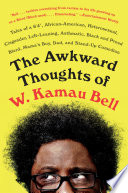
Bell's documentary work includes directing the HBO film 1000% Me: Growing Up Mixed , exploring multiracial identity, and producing the Showtime series We Need to Talk About Cosby , which won a Peabody Award but stirred controversy for grappling with Bill Cosby's civil rights legacy alongside his convictions for sexual assault . His stand-up specials, such as Private School Negro on Netflix , address parenting, free speech, and social issues. As an author, he penned the memoir The Awkward Thoughts of W. Kamau Bell and co-authored the New York Times bestselling Do the Work!: An Antiracist Activity Book .
Bell's commentary, often aligned with progressive advocacy groups like the ACLU where he serves as a racial justice ambassador, has faced criticism for framing routine interactions as evidence of pervasive racism , such as his 2018 account of a brief cafe delay which an opinion piece argued did not constitute discrimination . He has also publicly labeled comedian Joe Rogan as potentially racist and detrimental to comedy, reflecting broader tensions in the field over ideological differences.
W. Kamau Bell was born Walter Kamau Bell on January 26, 1973, in Palo Alto, California. He is the only child of Walter Bell, a businessman and former Alabama Insurance Commissioner, and Janet Cheatham Bell, an author. Bell's parents selected his middle name, Kamau—a Kenyan name meaning "quiet warrior"—to honor African cultural heritage during a period of heightened interest in African identity following the civil rights movement.
Following his birth, Bell's family relocated frequently in his early years, moving first to Indianapolis , Indiana . Bell and his mother later shifted to Boston , Massachusetts , then Chicago , Illinois , before settling in Mobile, Alabama , where his father maintained professional ties as a state official. These transitions placed him in varied urban settings across the Midwest, Northeast, and South , shaping his early experiences amid different regional demographics and economies.
In adulthood, Bell has reflected on his family's history through genealogical research, collaborating with his parents to trace ancestral roots via DNA testing and historical records, which revealed predominant sub-Saharan African origins comprising approximately 73% of his genetic makeup. This exploration underscored generational gaps in family narratives but did not alter core biographical details from his childhood.
Bell attended the University of Chicago Laboratory Schools , graduating in 1990. The institution, affiliated with the University of Chicago , emphasized experimental education and progressive pedagogy, exposing students to diverse intellectual environments during his formative years in Chicago .
Following high school, Bell enrolled at the University of Pennsylvania but left after one year without completing a degree, citing a desire to pursue comedy over traditional academics. He later took filmmaking classes at Columbia College Chicago , an institution known for its practical arts programs, which aligned with his emerging interest in performance and media production. These experiences provided foundational exposure to narrative techniques and creative expression, bridging personal anecdotes with observational analysis.