Authors & Guests / Malcolm X

Malcolm X
Malcolm X (born Malcolm Little; later el-Hajj Malik el-Shabazz; May 19, 1925 – February 21, 1965) was an American Muslim minister and black nationalist leader who rose from a background of poverty , family disruption, and criminal activity. He became a prominent spokesman for the Nation of Islam (NOI), advocating racial separatism , black self-reliance , and armed self-defense against white violence during the mid-20th-century civil rights struggle. Imprisoned from 1946 to 1952 for burglary and larceny , he encountered NOI teachings in prison, which shaped his rejection of his "slave name" and commitment to black empowerment, leading him to build NOI temples and membership from hundreds to tens of thousands by the early 1960s .
His rhetoric, exemplified in speeches like "The Ballot or the Bullet," emphasized political action over nonviolence and portrayed white Americans as inherent oppressors, drawing sharp contrast to integrationist approaches and earning him both fervent followers and widespread condemnation as a hate-monger. In 1964, disillusioned by NOI leader Elijah Muhammad's personal scandals and theological inconsistencies, Malcolm X broke from the group, undertook a hajj pilgrimage to Mecca , and adopted Sunni Islam , profoundly altering his worldview to recognize potential for racial harmony among true believers while intensifying global critiques of U.S. racial policies as human rights violations. He founded Muslim Mosque, Inc. (MMI) as a religious organization and the Organization of Afro-American Unity to unite black activists internationally and continued public speaking until his assassination by NOI-affiliated gunmen at a Manhattan rally on February 21, 1965, an event linked to internal NOI tensions and prior threats.
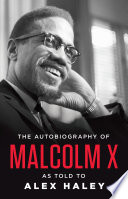
Malcolm X's legacy endures through his autobiography , co-authored with Alex Haley and published posthumously, which details his transformation and influences ongoing debates on racial identity, militancy, and Islamic reform in America, though his early separatist phase remains controversial for promoting division over reconciliation.
Malcolm Little, later known as Malcolm X, was born on May 19, 1925, in Omaha, Nebraska , to Earl Little , a Baptist minister and organizer for the Universal Negro Improvement Association (UNIA) , and Louise Little , a homemaker originally from Grenada in the British West Indies . Earl Little actively promoted the black nationalist ideas of Marcus Garvey through UNIA activities in the Midwest, hosting meetings and advocating for racial self-reliance , which exposed the family to Pan-Africanist ideology from an early age. The Littles had seven children, with Malcolm as the fourth, but the household faced immediate peril due to Earl's activism; shortly after Malcolm's birth, Ku Klux Klan members stormed their Omaha home, shattering windows and issuing death threats, prompting the family to relocate to Milwaukee, Wisconsin, and later Lansing, Michigan , to evade white supremacist violence.
In 1931, when Malcolm was six, his father Earl died under suspicious circumstances after being struck by a streetcar in Lansing; authorities ruled it an accident , but the family believed it was a deliberate act tied to Earl's Garveyite organizing and prior conflicts with white supremacists, possibly a lynching disguised as mishap. Louise struggled to support the children amid poverty and welfare interference, but by 1939 , overwhelmed by grief, financial hardship, and racial harassment, she suffered a mental breakdown and was involuntarily committed to Kalamazoo State Hospital, where she remained until 1963. The state then dispersed Malcolm and his six siblings into foster homes across Michigan , subjecting them to instability, separation, and direct encounters with systemic racism and economic deprivation that exacerbated family trauma.
Books by Malcolm X
Other works by Malcolm X
More books by this author — not yet covered in our podcast catalog.