Authors & Guests / Terence McKenna

Terence McKenna
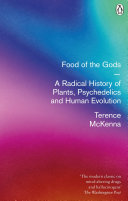
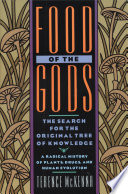
Terence Kemp McKenna (November 16, 1946 – April 3, 2000) was an American ethnobotanist, lecturer, and author focused on the ethnopharmacology of psychedelic plants. Born in Paonia, Colorado, he studied history at the University of California, Berkeley, before pursuing independent explorations of shamanism and consciousness-altering substances. McKenna advocated for the responsible use of naturally occurring psychedelics like psilocybin mushrooms and ayahuasca, arguing they could foster personal insight and cultural renewal, though his claims often relied on subjective experiences rather than controlled empirical studies. He gained prominence through lectures, books such as Food of the Gods (1992), and collaborations, including co-founding the Botanical Dimensions ethnobotanical preserve in Hawaii with his wife Kathleen.
McKenna's most notable contributions include the "Stoned Ape" hypothesis, suggesting psilocybin ingestion by early hominids enhanced visual acuity , language development, and social bonding, thereby accelerating human evolution —a theory presented in his writings but lacking fossil or genetic corroboration. He also formulated Timewave Zero, a fractal-based model derived from the I Ching intended to quantify historical novelty and predict a cosmic convergence, which he dated to December 21, 2012, but which failed to manifest as anticipated, underscoring the speculative nature of his metaphysics. Despite controversies over the unverified and sometimes extravagant elements of his ideas—such as encounters with "machine elves" in DMT hyperspace —McKenna influenced the psychedelic renaissance, inspiring renewed interest in entheogens amid growing scientific scrutiny of their therapeutic potential. His death from glioblastoma multiforme highlighted personal risks, including his admitted tobacco use, contrasting with his emphasis on plant-based psychedelics.
Terence Kemp McKenna was born on November 16, 1946, in Paonia, Colorado . He grew up in this rural western town, the older brother of Dennis McKenna , born four years later. From an early age, McKenna exhibited a solitary nature and fascination with natural history , including geology introduced through his uncle, leading to hobbies like fossil hunting in desert regions. His intellectual curiosity extended to complexity in nature and early encounters with ideas of altered states; around age 10, an essay on magic mushrooms ignited a persistent interest in psychedelics.
McKenna described himself as a "loner" during childhood, drawn to science fiction , shamanism , and transcendent experiences, influenced by readings such as Aldous Huxley's works on perception. He experimented with cannabis in adolescence, marking initial forays into mind-altering substances. These formative interests in visionary states and ethnobotanical knowledge shaped his worldview, though he remained somewhat detached from mainstream social norms.
In 1965, McKenna enrolled at the University of California, Berkeley , initially studying history , and was accepted into the selective Tussman Experimental College, a two-year program emphasizing interdisciplinary inquiry and personal exploration under a small faculty. While at Berkeley, he engaged peripherally with the 1960s counterculture , prioritizing academic pursuits in ecology and ethnobotany over political activism. McKenna left the university without completing his degree at that time, later returning in 1972 to earn a self-designed bachelor's in ecology , shamanism , and natural resource conservation. This educational foundation provided the intellectual framework for his subsequent explorations, blending historical analysis with biological and cultural studies.
In the early 1970s, Terence McKenna collaborated with his brother Dennis to develop practical techniques for cultivating psilocybin mushrooms indoors, drawing on spore samples and basic mycological methods available at the time.
Episodes
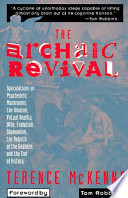
Books by Terence McKenna
Other works by Terence McKenna
More books by this author — not yet covered in our podcast catalog.