Authors & Guests / Scott Carney

Scott Carney
Scott Carney is an American investigative journalist and anthropologist whose work combines narrative non-fiction with ethnographic methods to uncover hidden aspects of human exploitation, physiological adaptation, and the risks of unverified wellness practices. Based in Denver, Colorado, he has contributed to outlets such as Wired , where he served as a contributing editor, and published in Mother Jones , Playboy , and Foreign Policy . Carney holds a master's degree in anthropology from the University of Wisconsin-Madison and has conducted extensive fieldwork in South Asia, where he speaks Hindi.
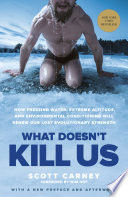
His investigative reporting earned the 2010 Payne Award for Ethics in Journalism for " Meet the Parents ," which exposed an international kidnapping-to-adoption ring. Carney's books include The Red Market , detailing the global trade in human organs, tissues, and children; What Doesn't Kill Us , a New York Times bestseller exploring evolutionary adaptations to extreme cold through Dutch athlete Wim Hof 's methods; and The Enlightenment Trap , which investigates deaths and psychological harms linked to intensive meditation retreats. Other works, such as The Wedge on human choice in physiological control and The Vortex on the 1970 Bhola Cyclone's geopolitical aftermath, highlight his range from bioethics to historical disasters. Carney has critiqued overhyped health trends, including later revelations on dangers in the Wim Hof empire, such as participant deaths and legal actions, reflecting his commitment to empirical scrutiny over promotional narratives.
Scott Carney was born on July 9, 1978, in Providence, Rhode Island . Public details about his family background and specific childhood experiences remain limited, with Carney himself providing scant self-reported accounts beyond a general emphasis on personal drive toward exploration.
Carney has described an enduring interest in leading an adventurous life from an early age, which drew him toward anthropology as a field promising opportunities for immersive experiences and discovery. This curiosity about human behavior and adaptability, rather than structured ideological frameworks, shaped his formative perspective, prompting him to seek paths that allowed direct engagement with real-world phenomena over abstract theorizing.
These early inclinations toward empirical inquiry into human limits and societal dynamics foreshadowed his shift from potential academic pursuits to fieldwork-driven reporting, prioritizing firsthand evidence of systemic issues like exploitation and resilience over conventional narratives.
Carney graduated from Kenyon College in 2000 with a bachelor's degree . He subsequently enrolled in the anthropology program at the University of Wisconsin-Madison, earning a Master of Arts in anthropology in 2005. His graduate coursework included training in ethnographic methods, which emphasize participant observation and immersive fieldwork to gather empirical data on social practices and cultural systems.
Carney advanced to doctoral studies in anthropology at the same institution but discontinued the Ph.D. program prior to completing his dissertation, opting instead for a career in journalism . This academic foundation in anthropology provided tools for rigorous, on-the-ground investigation, prioritizing direct evidence over abstracted theories and enabling analysis of human behaviors in unregulated or marginal environments through systematic observation and narrative documentation. Such methods foster causal insights derived from verifiable patterns, as opposed to ideologically filtered interpretations, by focusing on observable incentives and structural constraints shaping individual actions.
Carney relocated to Chennai , India , in 2006, where he began freelance investigative reporting on the country's underground markets in human tissues and adoption networks.
Books by Scott Carney
Other works by Scott Carney
More books by this author — not yet covered in our podcast catalog.