Authors & Guests / Robert M. Schoch Ph.D.

Robert M. Schoch Ph.D.
Robert M. Schoch is an American geologist , author , and academic renowned for his interdisciplinary research on ancient civilizations, particularly his geological analysis suggesting that the Great Sphinx of Giza shows evidence of water erosion from a period of heavy rainfall potentially dating to around 10,000 BCE or older, predating the traditional attribution to Pharaoh Khafre around 2500 BCE.
Schoch earned a B.A. in anthropology and a B.S. in geology from George Washington University , followed by an M.S., M.Phil., and Ph.D. in geology and geophysics from Yale University in 1983. Since 1984, he has served as a full-time faculty member and associate professor of natural sciences and mathematics at Boston University's College of General Studies, where he teaches courses on natural sciences, ancient civilizations, and archaeological mysteries. In 2017, he became director of the university's Institute for the Study of the Origins of Civilization, focusing on the geological and paleontological underpinnings of human history.
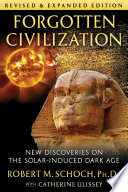
His research extends beyond the Sphinx to include studies on cataclysmic events at the end of the last Ice Age around 9700 BCE, solar outbursts, paleontology , evolution , environmental science , and prehistoric cultures worldwide, with a particular emphasis on ancient Egypt . Schoch has authored or co-authored several books, including Voices of the Rocks: A Scientist Looks at Catastrophes and Ancient Mysteries (1999), Origins of the Sphinx: Celestial Guardian of Ancient Civilization (2017), and Forgotten Civilization: The Role of Solar Outbursts in Our Past and Future (2012, revised 2021), as well as co-authoring the environmental science textbook Environmental Science: Systems and Solutions (2018). He served as principal scientific investigator for the 1993 NBC documentary The Mystery of the Sphinx .
Among his honors, Schoch received Boston University's Peyton Richter Award for interdisciplinary teaching in 1990, was appointed honorary professor at Bulgaria's Nikola Vaptsarov Naval Academy in 2014, and had the extinct mammal genus Robertschochia named in his honor (originally as Schochia in 1993) for his contributions to paleontology .
Robert M. Schoch earned a Bachelor of Arts in Anthropology and a Bachelor of Science in Geology from George Washington University in 1979. These undergraduate degrees provided him with a foundational interdisciplinary background combining human cultural studies with earth sciences, which later informed his geological analyses of ancient structures.
He pursued graduate studies at Yale University, where he obtained a Master of Science and a Master of Philosophy in Geology and Geophysics. Schoch completed his Ph.D. in Geology and Geophysics at Yale in 1983, with his dissertation titled Systematics, Functional Morphology and Macroevolution of the Extinct Mammalian Order Taeniodonta . This work focused on the paleontological classification and evolutionary patterns of an early mammalian order, contributing to understandings of prehistoric faunal adaptations through detailed stratigraphic and morphological analysis.
Following his Ph.D. in Geology and Geophysics from Yale University in 1983, Robert M. Schoch served as a curatorial assistant at the Yale Peabody Museum of Natural History , where he received training in museology and contributed to the management and study of geological and paleontological collections. This role marked his initial professional engagement in academic geology, focusing on the curation and analysis of fossil specimens that informed his early research in vertebrate paleontology.
During the early 1980s, Schoch published several peer-reviewed papers on stratigraphy and paleontology , establishing his foundational contributions to understanding ancient mammalian evolution and biostratigraphic sequences.