Authors & Guests / Richard Wrangham

Richard Wrangham
Richard Wrangham (born 1948) is a British biological anthropologist and primatologist, serving as the Ruth B. Moore Professor Emeritus of Biological Anthropology at Harvard University.
Wrangham earned his PhD in zoology from the University of Cambridge in 1975 and has conducted extensive fieldwork on chimpanzee behavior, founding the Kibale Chimpanzee Project in Uganda's Kibale National Park in 1987, where he has studied a community of chimpanzees for over three decades. His research emphasizes animal behavioral ecology and its implications for understanding the evolution of human social and political behavior, including patterns of intergroup aggression observed in chimpanzees that parallel human warfare.
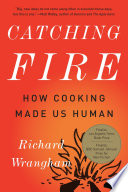
A key contribution is Wrangham's "cooking hypothesis," which posits that the control of fire for cooking, emerging around 1.8 million years ago with Homo erectus , enabled humans to extract more calories from food, facilitating smaller digestive tracts, larger brains, and reduced foraging time compared to raw-food diets in other primates. This idea, detailed in his 2009 book Catching Fire: How Cooking Made Us Human , draws on comparative physiology and chimpanzee feeding behaviors to argue that cooking is a fundamental adaptation driving human evolution.
Wrangham has also explored the evolutionary roots of human violence and cooperation, co-authoring Demonic Males: Apes and the Origins of Human Violence (1996), which links chimpanzee raiding to the origins of human aggression, and The Goodness Paradox (2019), which examines how humans evolved reduced reactive violence through self-domestication alongside retained capacities for strategic, coalitional violence. His work challenges simplistic views of human nature by integrating empirical observations from wild apes with fossil and anatomical evidence, earning him a MacArthur Fellowship in 1987 and fellowships in the American Academy of Arts and Sciences and the British Academy.
Richard Wrangham was born in 1948 in Britain.
His early fascination with nature developed during childhood in the Yorkshire countryside, where activities such as birdwatching and playing hide-and-seek in the woods cultivated an interest in the natural world and animal behavior. These formative experiences in rural England laid the groundwork for his later pursuits in ethology and primatology , emphasizing observation of wildlife in natural settings.
Wrangham earned a B.A. in Zoology from the University of Oxford in 1970. His undergraduate studies introduced him to animal behavior, with an early focus on primates that influenced his subsequent research trajectory.
He then pursued graduate studies at the University of Cambridge, where he completed a Ph.D. in Zoology in 1975 under the supervision of ethologist Robert Hinde. Wrangham's doctoral thesis, titled "The behavioural ecology of chimpanzees in Gombe National Park, Tanzania," examined the social and ecological dynamics of chimpanzee communities through direct observation. This work involved fieldwork at Gombe Stream National Park, providing foundational data on primate ranging patterns, group interactions, and resource use that shaped his expertise in behavioral ecology.
Wrangham held faculty positions in the Departments of Anthropology and Biology at the University of Michigan from 1980 to 1989. During this time, he focused on primate behavioral ecology through direct observation of wild chimpanzees, transitioning from earlier research in Tanzania to establishing new field sites.
His initial chimpanzee fieldwork began in the 1970s as a researcher at Jane Goodall's Gombe Stream National Park study site in Tanzania , where he contributed to documenting intergroup interactions and social dynamics, including early descriptions of chimpanzee boundary patrols and aggression patterns. This experience informed his subsequent independent efforts to collect comparable empirical data on chimpanzee societies in forested environments.
Books by Richard Wrangham
Other works by Richard Wrangham
More books by this author — not yet covered in our podcast catalog.