Authors & Guests / Richard L. Thompson
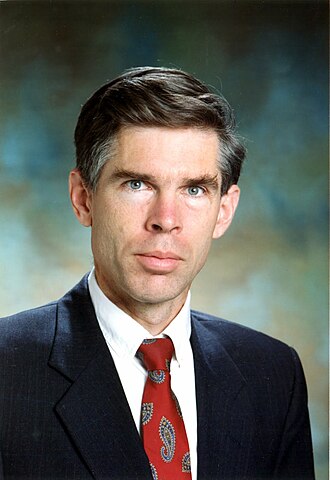
Richard L. Thompson
Richard Leslie Thompson (February 4, 1947 – September 18, 2008), also known as Sadaputa Dasa, was an American mathematician, author, and Gaudiya Vaishnava scholar who dedicated his career to examining Vedic cosmology and philosophy through the lens of modern science, challenging mechanistic interpretations of reality with evidence from ancient texts and empirical anomalies. Born in Binghamton, New York , Thompson earned a Ph.D. in mathematics from Cornell University in 1974, specializing in probability theory and statistical mechanics , before teaching at Temple University and later joining the International Society for Krishna Consciousness (ISKCON) as a disciple of A. C. Bhaktivedanta Swami Prabhupada . His seminal works, including Mechanistic and Nonmechanistic Science (1984), which critiques reductionist paradigms, Alien Identities (1993), linking Vedic accounts to UFO phenomena, and co-authorship of Forbidden Archeology (1993), which documents suppressed evidence questioning human evolutionary timelines, represent efforts to demonstrate the sophistication of ancient Indian knowledge systems in areas like astronomy and consciousness studies. Thompson's research emphasized causal mechanisms rooted in Vedic metaphysics, arguing for non-material influences on physical phenomena, and he produced lectures and seminars preserved through channels dedicated to Vedic perspectives on science. His contributions, often marginalized in mainstream academia due to institutional preferences for materialist frameworks, continue to influence discussions on alternative scientific models via archived materials and publications from outlets like the Bhaktivedanta Book Trust.
Richard L. Thompson was born on February 4, 1947, in Binghamton, New York , a mid-sized industrial city in the Southern Tier region known for its manufacturing and educational institutions. He spent his early years growing up in Binghamton, the environment of which provided a backdrop for his developing intellectual curiosity , though specific family details from this period remain undocumented in primary sources.
Thompson's formative influences in childhood centered on an emerging aptitude for analytical subjects, laying groundwork for his later scientific inclinations without recorded formal training at that stage. Local access to libraries and self-directed reading likely contributed to early explorations in mathematics and related fields, reflecting a pattern of independent inquiry that characterized his approach prior to structured academic pursuits. No explicit encounters with philosophy or Eastern concepts are noted from adolescence, with such interests manifesting later during university years.
Richard L. Thompson completed his undergraduate education with a B.S. in Mathematics and Physics from the State University of New York at Binghamton in 1969. He then pursued graduate studies, earning an M.A. in Mathematics from Syracuse University in 1970.
Thompson's doctoral work culminated in a Ph.D. in Mathematics from Cornell University in 1974, with a specialization in probability theory and statistical mechanics. His dissertation, titled "Equilibrium States of Thin Energy Shells," was published as a memoir by the American Mathematical Society (No. 150). This research focused on probabilistic models of physical systems under equilibrium conditions, emphasizing rigorous deductive and empirical approaches to complex dynamical behaviors.
The curriculum at Cornell during Thompson's tenure underscored foundational techniques in stochastic processes and thermodynamic modeling, fostering a deep understanding of uncertainty quantification and statistical inference in natural phenomena. Such training honed skills in assessing low-probability events and systemic patterns, providing a methodological framework grounded in mathematical precision rather than ad hoc assumptions.
Thompson received his Ph.D.