Authors & Guests / Napoleon Hill

Napoleon Hill
Oliver Napoleon Hill (October 26, 1883 – November 8, 1970) was an American author instrumental in shaping the early self-help movement through works emphasizing positive thinking, goal-setting, and success principles derived from purported studies of wealthy individuals.
Hill's most enduring contribution is Think and Grow Rich (1937), which outlines 13 steps to riches based on his alleged 20-year research involving over 500 successful figures, and has sold more than 15 million copies, influencing subsequent generations of motivational literature and figures in business and self-improvement. Earlier, he published The Law of Success (1928), an expansive eight-volume set distilling similar philosophies. Despite these outputs, Hill endured chronic financial instability, multiple bankruptcies, and unsuccessful ventures in publishing, sales, and advisory services throughout his life.
Central to Hill's narrative was his claim of being commissioned by Andrew Carnegie around 1908 to systematize success laws through extensive interviews, yet no contemporary records or corroboration from Carnegie's biographers support this encounter, casting doubt on the empirical foundation of his methodologies. Further scrutiny reveals patterns of embellishment, including unsubstantiated assertions of advising U.S. presidents Woodrow Wilson and Franklin D. Roosevelt , involvement in fraudulent schemes like unauthorized stock promotions and charity mismanagement, and associations with pseudoscientific pursuits such as a purported immortality cult . These discrepancies underscore a career blending inspirational rhetoric with unverifiable anecdotes, prompting evaluations of his legacy as more motivational myth-making than rigorously derived insight.
Napoleon Hill was born Oliver Napoleon Hill on October 26, 1883, in a one-room log cabin on the Pound River in Wise County, Virginia , a remote Appalachian region marked by economic hardship. His parents were James Monroe Hill, a farmer and blacksmith who later practiced dentistry , and Sarah Sylvania Blair Hill, who managed the household in their impoverished circumstances. The family resided in poverty, with limited resources and opportunities in the isolated mountain area, where self-sufficiency through manual labor was essential. Hill's full name reflected his family's modest origins, with his grandfather James Madison Hill having migrated from the Midwest.
Hill's mother died of dropsy in 1892 at age 26, when he was nine years old, leaving him and his younger siblings under their father's care amid further instability. James Monroe Hill remarried in 1894 to Martha Ramey, whose influence as stepmother proved pivotal; she encouraged Hill's education, provided him with a typewriter at age 12, and steered him away from a pattern of rebellious behavior that included truancy and minor conflicts. This familial shift occurred against a backdrop of ongoing financial strain, requiring Hill to contribute through labor from an early age to support basic needs and any prospects for schooling.
Napoleon Hill's formal education was rudimentary, consisting of attendance at a local one-room schoolhouse where basic literacy and arithmetic were taught, but he discontinued schooling around age 12 to contribute to family needs through manual labor such as gathering and selling firewood. At that age, Hill persuaded his father to purchase a secondhand typewriter for $2 by vowing to become a professional writer , marking the onset of his self-directed learning path.
Largely self-taught thereafter, Hill developed his knowledge through voracious reading of available books and practical experience, emphasizing personal initiative over institutional instruction—a principle he later advocated in his writings. He briefly attended a business college in Tazewell, Virginia , around 1901 to hone skills for journalism, but financial constraints limited his time there.
Books by Napoleon Hill
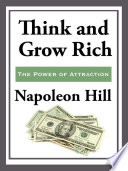
Other works by Napoleon Hill
More books by this author — not yet covered in our podcast catalog.