Authors & Guests / Herbert Benson
Herbert Benson
Herbert Benson (April 24, 1935 – February 3, 2022) was an American cardiologist and mind-body medicine researcher who advanced the empirical understanding of how repeatable mental techniques could produce measurable physiological changes to mitigate stress-induced health impairments.
A graduate of Wesleyan University with a biology degree in 1957 and Harvard Medical School with an MD in 1961, Benson joined Harvard's faculty in 1969 as an associate professor of medicine and conducted clinical research at Beth Israel Deaconess Medical Center . His early work examined autonomic nervous system responses in practitioners of transcendental meditation , leading to the identification of the relaxation response —a innate, heritable state of decreased sympathetic nervous activity, lowered metabolism , heart rate , and blood pressure , achievable via simple, secular practices like focused breathing or repetitive mental focus without reliance on specific beliefs or rituals.
Benson detailed this response in his 1975 book The Relaxation Response , which synthesized laboratory data showing its elicitation could normalize hypertension and alleviate symptoms of anxiety and insomnia , challenging prior dismissals of such techniques as pseudoscientific. Over four decades, he co-authored more than 190 peer-reviewed publications and 12 books, including Timeless Healing (1996) and Relaxation Revolution (2010), establishing mind-body interventions as evidence-based adjuncts to conventional treatments for conditions like chronic pain and cardiovascular disease . In 1992, he co-founded the Mind/Body Medical Institute at Deaconess Hospital (later integrated as the Benson-Henry Institute for Mind Body Medicine at Massachusetts General Hospital ), where clinical programs trained patients and providers in these methods, yielding data on improved outcomes in stress-related disorders .
Benson's approach emphasized causal mechanisms—such as gene expression changes from repeated relaxation—over anecdotal or faith-based claims, bridging Eastern contemplative practices with Western physiology through controlled studies rather than uncritical adoption. This framework influenced integrative medicine programs globally, though he cautioned against overpromising cures, prioritizing replicable benefits from low-cost, accessible techniques.
Herbert Benson was born on April 24, 1935, in Yonkers, New York . He was raised in a Jewish family, with his religious background rooted in Judaism , though he was not personally observant. His father, Charles Benson, managed a series of wholesale produce businesses, reflecting an entrepreneurial spirit common in mid-20th-century American urban families. His mother, Hannah (Schiller) Benson, served as a homemaker.
Benson's early years unfolded in the suburban setting of Yonkers, adjacent to New York City , amid the economic recovery and social shifts following World War II . This environment, characterized by post-war optimism and the influx of diverse immigrant influences in the region, likely fostered a sense of self-reliance shaped by familial business endeavors and cultural heritage . No specific personal or familial health experiences from his childhood are documented in available biographical accounts.
Benson received a Bachelor of Arts degree in biology from Wesleyan University in 1957. He subsequently enrolled at Harvard Medical School , earning his Doctor of Medicine degree in 1961. This foundational education in biological sciences and medicine instilled a commitment to empirical methodologies and physiological analysis, core tenets of his subsequent career.
After graduation, Benson undertook postgraduate training in internal medicine, beginning with a straight internship at King County Hospital in Seattle from 1961 to 1962, followed by an assistant residency at University Hospital of the University of Washington from 1962 to 1963.
Books by Herbert Benson
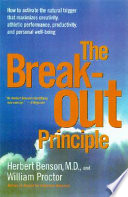
Other works by Herbert Benson
More books by this author — not yet covered in our podcast catalog.