Authors & Guests / Guillermo del Toro

Guillermo del Toro
Guillermo del Toro Gómez (born October 9, 1964) is a Mexican filmmaker, producer, screenwriter, author, and artist. Born in Guadalajara, Jalisco, he developed an early interest in filmmaking influenced by his Catholic upbringing and exposure to horror and fantasy genres. Del Toro first gained international recognition with his debut feature Cronos (1993), a vampire horror film that earned critical praise and an Academy Award nomination for Best Makeup. His subsequent works, including The Devil's Backbone (2001) and Pan's Labyrinth (2006), blend gothic fantasy with historical and political themes, securing three Academy Award nominations for the latter, including Best Foreign Language Film and Best Original Screenplay. Del Toro achieved major commercial and critical success with The Shape of Water (2017), a romantic fantasy film that won four Academy Awards, including Best Picture and Best Director. His films are characterized by elaborate practical effects, monstrous imagery, and explorations of human vulnerability, often drawing from Catholic iconography and fairy tale traditions.
Guillermo del Toro Gómez was born on October 9, 1964, in Guadalajara, Jalisco , Mexico , the son of automotive entrepreneur Federico del Toro Torres and Guadalupe Gómez Camberos. His parents were of Spanish, Irish, and German descent, and the family resided in Guadalajara throughout his early years.
The family's financial circumstances improved significantly when del Toro's father won a Mexican national lottery prize estimated at $6 million, which he invested in expanding a Chrysler dealership into a larger automotive business empire. This windfall provided a comfortable upbringing amid the economic volatility common in mid-20th-century Mexico .
Del Toro was primarily raised by his devout Catholic grandmother, who enforced strict religious discipline and exposed him intensively to Catholic rituals, iconography , and dogma during his formative years in Guadalajara. She reportedly clashed with his childhood fascination for drawing fantastical and monstrous figures, once attempting an exorcism to curb what she perceived as demonic influences in his artwork. His mother, Guadalupe, supported his early creative endeavors, later appearing in his student films such as Doña Lupe .
Guillermo del Toro exhibited an early fascination with horror and dark fantasy during his childhood in Guadalajara, Mexico , drawing from classic films and literature that shaped his affinity for monsters and the grotesque. This interest persisted despite his upbringing under a strict Catholic grandmother who disapproved of such material and once arranged an exorcism for him due to his perceived obsession with fantasy and horror. His father's collection of anatomy books offered another key avenue of exposure, as young del Toro spent hours studying them, which cultivated his understanding of organic structures and influenced his later depictions of hybrid creatures blending human and inhuman forms.
Del Toro's engagement with art began concurrently, manifesting in self-initiated drawings of monsters and fantastical scenes that served as an outlet for his imaginative preoccupations. Books purchased by his father provided a refuge, fostering del Toro's immersion in gothic and horror narratives that bridged visual art and storytelling . These elements—horror media, anatomical study, and personal sketching—formed the bedrock of his aesthetic, emphasizing visceral, otherworldly beings over sanitized fantasy.
By his high school years, this foundational exposure translated into practical creation, including a short film featuring a monster emerging from a toilet , repelled by human ugliness, which reflected his internalized horror tropes and budding artistic voice. Such early experiments underscored a causal link between personal emotional turmoil—a self-described "horrible" childhood—and his gravitation toward horror as both escapism and expression.
Books by Guillermo del Toro
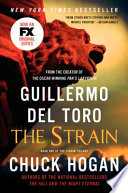

Other works by Guillermo del Toro
More books by this author — not yet covered in our podcast catalog.