Authors & Guests / Dr Anatoly Fomenko

Dr Anatoly Fomenko
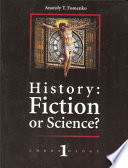
Anatoly Timofeevich Fomenko (born 13 March 1945) is a Russian mathematician and academic known for contributions to differential geometry , symplectic topology, and Hamiltonian mechanics , as well as for developing the New Chronology, a theory challenging conventional historical timelines through statistical and astronomical analysis. Fomenko graduated from the Mechanics and Mathematics Faculty of Moscow State University in 1967 and earned his PhD in 1972, subsequently joining the university's Department of Differential Geometry and Applications, where he became a professor and full member of the Russian Academy of Sciences . His mathematical research includes over 180 publications and 26 monographs on topics such as variational calculus, computer geometry, and topological classification of integrable systems, earning him awards including the Moscow Mathematical Society Prize in 1974, the USSR Academy of Sciences mathematics prize in 1987, and the State Prize of the Russian Federation. In parallel with his mathematical career, Fomenko co-authored the New Chronology with Gleb Nosovsky starting in the 1970s, proposing that traditional chronology inflates history by centuries through duplicated narratives and erroneous dating, compressing events such that ancient civilizations like Rome and Greece are reinterpreted as reflections of medieval Eurasian history, supported by empirical correlations in dynastic parallels, eclipses, and radiocarbon critiques. This framework, detailed in multi-volume works like History: Fiction or Science? , posits a global empire centered in the 11th-17th centuries as the true origin of recorded civilization, but it has been rejected by historians for disregarding archaeological, linguistic, and dendrochronological evidence in favor of selective statistical modeling.
Anatoly Timofeevich Fomenko was born on March 13 , 1945 , at 5:00 a.m. in the settlement of Rutchénkovo near Stalino (now Donetsk ), Ukraine SSR, shortly before the conclusion of World War II in Europe . His parents, Timofey Grigorievich Fomenko (1910–1992), an engineer and mathematician who later became a professor , and Valentina Polikarpovna Fomenko (née Markova, 1918–2009), a teacher and mathematician who instructed him in drawing, had married on December 31, 1943. The family, which included a sister named Tanya, resided initially in Donetsk , where the father worked at the Donbassugol coal enterprise and subsequently at the Donetsk Coal Institute.
In 1950, when Fomenko was five years old, the family was compelled to relocate to Magadan in the Russian Far East , a remote region notorious for its severe climate and association with Soviet penal labor systems. This move stemmed from Soviet postwar policies targeting individuals like Fomenko's father, who had remained in territory occupied by German forces during the war , resulting in his reassignment to the VNI-1 Institute in Magadan under threat of further repercussions. The harsh environment contributed to family hardships, including Fomenko developing severe myopia and undergoing tonsillectomy . The family returned to eastern Ukraine , settling in Lugansk, in 1959.
During his school years in Magadan , Fomenko exhibited early aptitude for mathematics and scientific inquiry, influenced by his parents' academic backgrounds. He secured first place in a regional mathematics olympiad in 1956, earning a book prize, and received three bronze medals at the All-Union Exhibition of Economic Achievements (VSHV) for exhibits on natural sciences between 1956 and 1959. His creative inclinations surfaced as well, with a science fiction story titled "The Mystery of the Milky Way " published in the youth newspaper Pionerskaya Pravda in 1958–1959. These pursuits reflected self-directed study amid the isolating conditions of Magadan , laying groundwork for his later intellectual trajectory prior to adolescence.