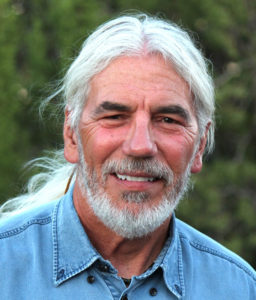
Dan Flores
Dan Flores (born 1948) is an American environmental historian , writer , and professor emeritus renowned for his explorations of the cultural, ecological, and natural history of the American West . Born in Vivian, Louisiana , he earned a PhD in history from Texas A&M University in 1978 and spent much of his career as the A. B. Hammond Chair in Western History at the University of Montana from 1992 until his retirement in 2014. Now residing in the Santa Fe area of New Mexico , Flores has authored over a dozen books that blend scholarly analysis with narrative storytelling to examine human interactions with Western landscapes and wildlife.
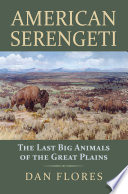
Flores's academic and literary contributions focus on themes such as conservation, Indigenous perspectives, and the evolution of North American ecosystems, often challenging conventional narratives of frontier expansion. His notable works include Coyote America: A Natural and Supernatural History (2016), a New York Times bestseller that traces the coyote's role in American culture and ecology and earned the Sigurd F. Olson Nature Writing Award; American Serengeti: The Last Big Animals of the Great Plains (2017), which won the Stubbendieck Great Plains Award; and Wild New World: The Epic Story of Animals and People in America (2022), recipient of the Rachel Carson Environment Book Award and the National Outdoor Book Award. Earlier books like The Natural West: Environmental History in the Great Plains and Rocky Mountains (2001) and Horizontal Yellow: Nature and History in the Near Southwest (1999) established his reputation for integrating environmental science with historical context.
Beyond books, Flores has contributed essays to major publications including The New York Times , Los Angeles Times , Chicago Tribune , and Time magazine, advocating for wildlife protection—such as in his 2016 op-ed urging an end to coyote killing programs. He has appeared in documentaries like Anthony Bourdain's Parts Unknown and Ken Burns's The American Buffalo (2023), and hosts the podcast The American West with Dan Flores on the MeatEater network, further disseminating his expertise on regional biodiversity and human impacts. His work underscores the interconnectedness of people and nature, influencing environmental policy and public understanding of the West's fragile heritage.
Dan Louie Flores was born on October 19, 1948, in Vivian, Louisiana, a small town in Caddo Parish near the Texas border. His family traced its roots deep into Louisiana's history, with ancestors dating back eight generations to the colony's founding in the early 1700s, including land along Bayou Pierre that was later affected by the oil industry's expansion in the 1930s. Raised in a rural setting near Shreveport during the 1960s, Flores experienced the working landscapes of northwestern Louisiana, where his family's longstanding ties to the region shaped an early awareness of environmental change.
Flores's childhood immersed him in the piney woods and bayous of rural Louisiana , fostering a profound connection to the natural world. He spent much of his youth exploring these wooded and watery environments, engaging in hunting squirrels, rabbits, and ducks , activities common in the area's outdoor culture . These experiences exposed him to local wildlife , including black bears and deer that had become scarce due to historical exploitation, igniting a lifelong fascination with natural history and the interplay between humans and ecosystems. Influenced by his Southern Methodist mother's European-influenced view that animals lacked souls—a perspective she shared with him at age four—Flores began questioning human attitudes toward nature early on.
Family trips during his youth broadened Flores's horizons beyond Louisiana's dense, limited-visibility forests, where views rarely extended beyond 150 feet.