Scott Horton
Scott Horton is an American author, radio host, and director of the Libertarian Institute, where he serves as editorial director of Antiwar.com and hosts The Scott Horton Show . He is a leading voice in the libertarian non-interventionist movement, focusing on critiques of U.S. foreign policy driven by empirical analysis of interventionist outcomes, such as the wars in Iraq , Afghanistan , and escalating tensions with Russia and China .
Horton has conducted over 6,000 interviews since 2003, featuring experts who challenge official rationales for military actions and highlight causal links between U.S. policies and subsequent conflicts or terrorism . Previously, he hosted Antiwar Radio on Pacifica station KPFK 90.7 FM in Los Angeles , extending his platform for discussions debunking premises behind American interventions. His work emphasizes first-hand accounts and declassified evidence to argue against perpetual warfare, positioning him as a persistent skeptic of establishment narratives often amplified by biased media and academic sources.
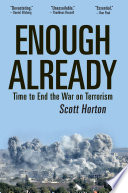
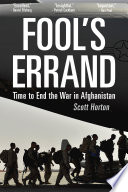
Among his notable achievements, Horton has authored books that compile historical data and policy critiques, including Fool’s Errand: Time to End the War in Afghanistan (2017), Enough Already: Time to End the War on Terrorism (2021), and Provoked: How Washington Started the New Cold War With Russia and the Catastrophe in Ukraine (2024), which detail how U.S. actions have provoked adversaries and prolonged global instability. These publications, alongside contributions to outlets like The American Conservative and appearances in documentaries such as An Endless War: Getting Out of Afghanistan , underscore his commitment to advocating policy shifts toward restraint based on realist assessments of costs and blowback.
Scott Horton was born in 1976 in Austin, Texas , where he spent his formative years in modest circumstances. Public details about his family background remain sparse, with Horton maintaining a focus on ideas rather than personal biography in his public discourse. As a teenager working as a grocery clerk, he witnessed the 1993 Waco siege unfold on television, an event that profoundly radicalized him toward libertarianism ; the federal government's assault on the Branch Davidian compound, resulting in 76 deaths including children, instilled in him a deep skepticism of state power and its capacity for overreach.
Horton's early intellectual development centered on libertarian principles, drawing him to critiques of government authority through historical study. He majored in history during college, cultivating a particular interest in World War II and its implications for power and interventionism. This period marked his commitment to libertarianism, influenced by thinkers emphasizing individual liberty and limited government, which fostered his aversion to coercive state actions both domestic and abroad.
The end of the Cold War initially brought optimism about reduced U.S. military engagements, but Horton's views shifted toward disillusionment amid 1990s foreign policy actions, including observations of the Gulf War's conduct and aftermath. At age 15 during the 1991 conflict, he began questioning narratives of American exceptionalism and the justifications for overseas interventions, setting the stage for his later focus on non-interventionism without yet entering activism.
Horton possesses limited formal higher education credentials, having forgone traditional college pathways in favor of self-directed study in history , economics , and international relations , drawing from libertarian sources including collaborations with figures affiliated with the Mises Institute such as Tom Woods . This autodidactic approach equipped him with foundational knowledge of non-interventionist principles prior to his public engagements.
His early activism commenced in the late 1990s through participation in Austin, Texas pirate radio, beginning with Free Radio Austin 97.