Dr. Shanna Swan
Shanna H. Swan, Ph.D., is an American environmental and reproductive epidemiologist specializing in the effects of chemical exposures on human fertility and development.
As a professor in the Department of Environmental Medicine and Public Health at the Icahn School of Medicine at Mount Sinai, Swan has authored over 200 peer-reviewed papers during more than 25 years of research into endocrine-disrupting chemicals (EDCs) such as phthalates, focusing on their subtle impacts on reproductive health through innovative epidemiological methods.
Her most cited contribution is co-authoring a 2017 meta-regression analysis of 185 studies, which found a 52.4% decline in sperm concentration and 59.3% drop in total sperm count among men in North America, Europe, Australia, and New Zealand from 1973 to 2011, with a 2022 update confirming over 50% reductions across four decades.
Swan has also demonstrated causal associations in human cohorts, such as prenatal phthalate exposure correlating with shorter anogenital distance—a proxy for testicular dysgenesis—in male offspring from the Study for Future Families, alongside reduced semen quality in exposed adults.
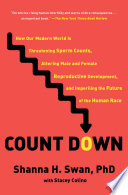
These findings underpin her 2021 book Count Down: How Our Modern World Is Threatening Sperm Counts, Altering Male and Female Reproductive Development, and Imperiling the Future of the Human Race , which synthesizes evidence linking EDCs in consumer products to rising infertility trends and advocates for reduced exposures to avert population-level reproductive collapse.
While her empirical data on trends and biomarkers have advanced the field, Swan's emphasis on chemical causation has drawn scrutiny for underweighting alternative explanations like sedentary lifestyles or selection biases in semen samples, with re-analyses questioning the universality and immediacy of the fertility crisis she describes.
Shanna Swan, born Helen Wittenberg in Pennsylvania in 1936, was the daughter of Rudolph Wittenberg, a German-Jewish writer from Berlin who had participated in anti-Nazi underground activities before emigrating to the United States in 1934, and Goldie Ray Polturak, an American woman who had carried resistance messages across Europe. Her father's cultured family background included a tradition of literary evenings where he read drafts of his novels aloud, instilling an early appreciation for intellectual pursuits amid the challenges of displacement.
The family faced relative poverty after arriving in the U.S., which Swan later recalled as heightening her awareness of social differences, compounded by her father's heavy German accent and the family's affiliation with the Communist Party—a fact that caused her childhood shame amid McCarthy-era suspicions. Her parents nicknamed her "The Victorian Lady" and discouraged participation in sports due to her petite stature, fostering a self-reliant play style, such as constructing and inhabiting a cardboard box "house" for imaginative independence.
Relocating to New York City, Swan at age 10 discovered acting through classes at the 92nd Street Y, leading to roles as a child performer on television and radio, an pursuit that initially dominated her early interests over academic or scientific inclinations. This period of creative exploration, amid a household shaped by European émigré resilience and ideological commitments, preceded her later pivot toward empirical fields, though no direct childhood events document nascent sparks for statistics or health sciences.
Shanna Swan earned a Bachelor of Science degree in mathematics and logic from the City College of New York in 1958. She subsequently obtained a Master of Arts in biostatistics from Columbia University in 1961, where she studied under biostatistician Agnes Berger.
Swan completed her Doctor of Philosophy in statistics at the University of California, Berkeley in 1963, with her dissertation directed by Jerzy Neyman; at the time, she was known by her birth name, Helen Wittenberg.