Daryl Davis
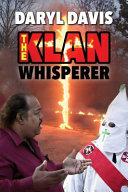
Daryl Davis (born 1958) is an American R&B, blues, and jazz musician, bandleader, and activist. A graduate of Howard University with a Bachelor of Music degree, Davis has built a career performing with rock and roll pioneers such as Chuck Berry and as the keyboardist on Cephas & Wiggins' Grammy-winning 1992 album Flip, Flop & Fly . Davis gained prominence for his direct engagement with white supremacists, particularly Ku Klux Klan members, beginning in the 1980s after an encounter with a Klan member at a bar. By posing the question "How can you hate me when you don't even know me?" to initiate dialogue, he has reportedly persuaded over 200 individuals to abandon the organization, collecting their robes and hoods as tangible evidence of their disavowal. This approach, detailed in his books Klan-destine Relationships (1996) and The Klan Whisperer (2024), emphasizes personal relationships over confrontation to challenge racist ideologies at their roots. His activism has earned recognition, including an honorary Doctorate in Humane Letters from Post University, though it has drawn scrutiny for potentially humanizing extremists without broader institutional safeguards. Davis continues to perform, speak on race relations, and advocate for dialogue-based deradicalization, maintaining that sustained interaction reveals the inconsistencies in hate-driven worldviews.
Daryl Davis was born on March 26, 1958, in Chicago, Illinois, to parents affiliated with the U.S. State Department's Foreign Service, resulting in frequent international relocations during his childhood that exposed him to diverse cultural environments across Europe and beyond.
In 1968, at age ten, Davis became acutely aware of racial prejudice amid the widespread riots following the assassination of Martin Luther King Jr., an event that ignited his early curiosity about the roots of hatred despite limited personal interactions with it up to that point due to his overseas upbringing.
A pivotal formative experience occurred shortly thereafter when, as the sole Black member of his Cub Scout troop, Davis participated in a parade in Massachusetts and was pelted with bottles, rocks, and other objects by white spectators lining the route, leaving him bewildered and prompting immediate questions to his parents about why strangers would attack him without knowing him.
Davis earned a Bachelor of Music degree from Howard University in Washington, D.C., in 1980, with a focus on jazz performance. His coursework emphasized jazz history, theory, and practical performance skills, which built foundational technical proficiency in piano playing, including elements of boogie-woogie style. As a student, he participated in the university's Jazz Vocal Ensemble, gaining hands-on experience in ensemble dynamics and vocal-instrumental integration within a jazz context.
This formal training was supplemented by mentorship from influential pianists such as Pinetop Perkins, a key figure in blues and boogie-woogie, though such guidance extended beyond structured classroom instruction. The academic environment at Howard, a historically Black university with a strong music program, provided Davis with rigorous exposure to jazz pedagogy without venturing into professional engagements during his enrollment.
Daryl Davis entered the Washington, D.C., music scene in the early 1980s after earning a Bachelor of Music degree from Howard University in 1980, where he participated in the Jazz Vocal Ensemble. Initially self-taught on piano and guitar from age 15, influenced by international radio broadcasts of rock 'n' roll artists like Chuck Berry and Elvis Presley, Davis emulated the high-energy piano styles of figures such as Johnnie Johnson. His early performances included sitting in with local bands during gigs in the D.C. area and playing piano for a Chuck Berry concert in Baltimore in 1981 at age 22.