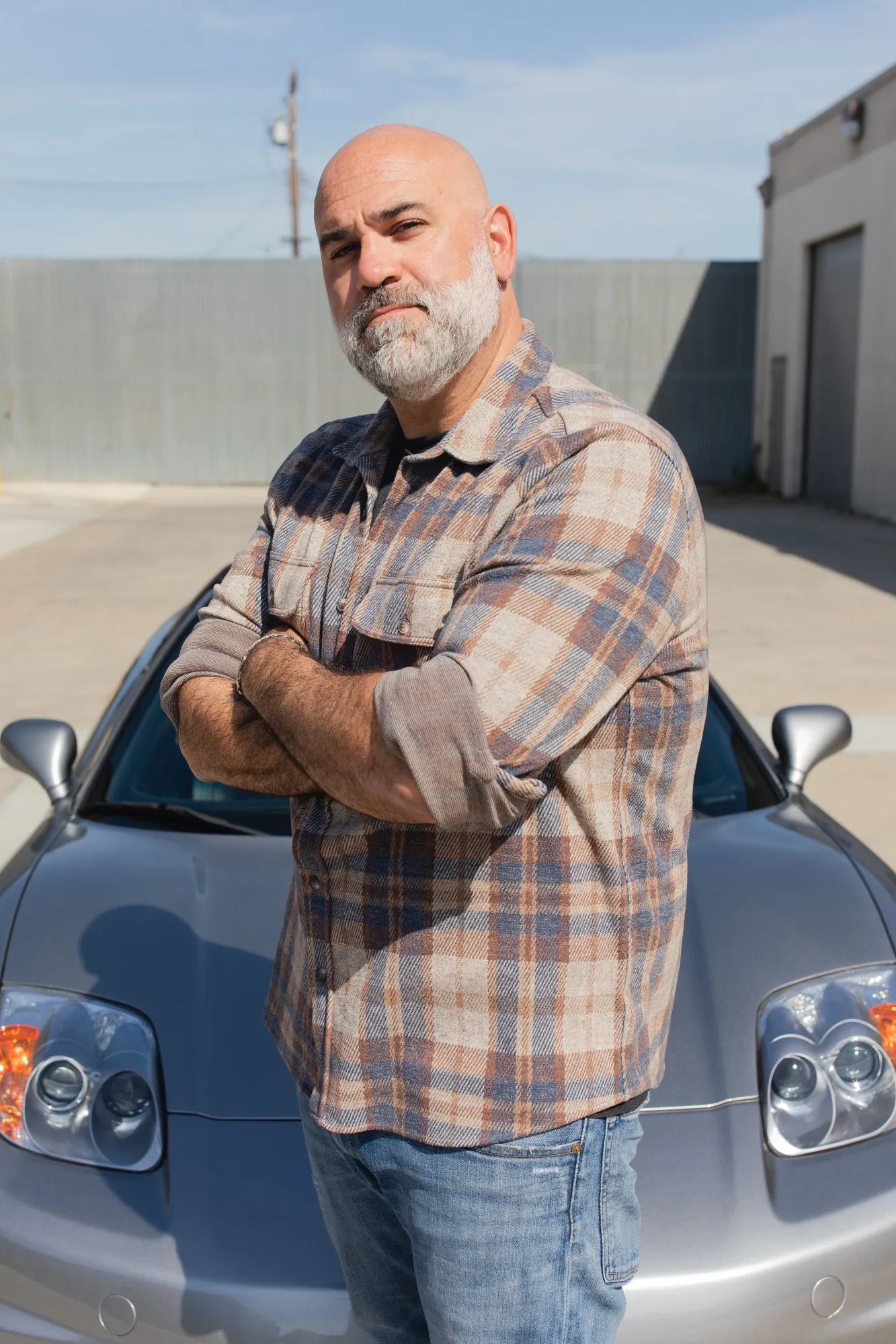
Matt Farah
Road & Track (stylized as R&T) is an American automotive enthusiast magazine that covers car reviews, motorsport news , and automotive culture, with a focus on high-performance vehicles, road tests, and the driving experience. Founded in 1947 in Hempstead, New York , by Wilfred H. Brehaut Jr. and Joseph S. Fennessy, it began as a modest publication aimed at sports car enthusiasts amid the post-World War II surge in automotive interest. Now owned by Hearst Magazines since 2011, the magazine is published six times per year in print and maintains a robust digital presence, serving a global audience of car aficionados.
The magazine's early years were marked by financial challenges, producing only a handful of issues initially before John R. Bond and Elaine Bond assumed control in 1952 , stabilizing its operations and expanding its circulation from around 18,000 to over 64,000 subscribers by the mid-1970s. Under their stewardship, Road & Track distinguished itself with rigorous testing methodologies, international coverage—particularly of European and Japanese cars—and a sophisticated editorial tone that elevated automotive journalism . Its archives, spanning decades of test data, photographs, and articles, were donated to Stanford University's Revs Program in 2012, preserving its legacy as a pioneering force in the field.
In the modern era , Road & Track continues to innovate, blending traditional road tests with digital content on emerging technologies like electric vehicles and autonomous driving, while maintaining its commitment to enthusiast-driven storytelling. Led by Editor-in-Chief Daniel Pund since 2024, it reaches readers through its website, social media, and premium memberships, fostering a community around the passion for cars. The publication's influence extends beyond print, having shaped automotive discourse and consumer insights for over 75 years.
Road & Track was founded in June 1947 by Wilfred H. Brehaut Jr. and Joseph S. Fennessy, two engineers and automotive enthusiasts, in Hempstead, New York , as a small publication dedicated to car lovers in the post-World War II era. The inaugural issue, a modest 32-page edition priced at 25 cents with an annual subscription of $3, emerged amid a surge in American interest in automobiles following the war's end, when civilian car production resumed and sports car culture began to flourish. Brehaut and Fennessy, leveraging their passion for racing and European imports, aimed to fill a gap for detailed coverage of vehicles beyond mainstream domestic models.
The magazine's early years were marked by an irregular publication schedule, with only six issues released over the first three years from 1947 to 1949, reflecting the founders' limited financial resources and the nascent state of the enthusiast market. These issues appeared sporadically—starting with Volume 1, Number 1 in June 1947, followed by May and June 1948, August 1948, February 1949, and December 1949—allowing the publication to test reader interest amid the post-war economic recovery and growing fascination with high-performance driving.
Content in these initial issues centered on road tests, European automobiles, and fundamental automotive news to engage a niche audience of dedicated enthusiasts. For instance, articles highlighted rarely seen European exotics like the Alfa Romeo 158 and British motor industry advancements, alongside practical road tests of models such as the 1946-47 Ford and coverage of events like the New York Auto Show. Regular features, including "Report from Europe " by contributor Roger Barlow, provided insights into international racing and imports, appealing to readers eager for technical details on speed and design in an era of limited access to such cars.