Johann Hari
Johann Eduard Hari (born 21 January 1979) is a Scottish-born British journalist and author whose work has focused on social critiques of drug policy, mental health treatment, and modern distractions. He gained early acclaim as a columnist for The Independent , earning Amnesty International's National Newspaper Journalist of the Year award twice for advocacy on human rights and political issues. However, in 2011, Hari resigned from the newspaper after admitting to plagiarism—copying passages from other publications without attribution—and embellishing interviews by inserting fabricated or lifted quotes, practices he described as attempts to enhance his subjects' statements.
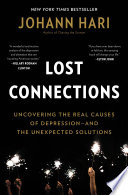
Hari's books, including Chasing the Scream (2015), which argues against punitive drug policies by highlighting historical and social factors in addiction , and Lost Connections (2018), which posits that depression stems primarily from social disconnection rather than biochemical deficits, have achieved commercial success and influenced public discourse. These works challenge established paradigms, such as the war on drugs and the dominance of antidepressant medications, but have drawn criticism for selective use of evidence, misrepresentation of scientific studies, and oversimplification of complex causal mechanisms. In Stolen Focus (2022), Hari extends this approach to attention deficits, attributing them to environmental and technological factors over innate or pharmacological explanations, amid ongoing scrutiny of his methodological rigor.
The 2011 scandal extended beyond journalism to Hari's use of a pseudonymous Wikipedia account to edit articles on critics, inserting unsubstantiated claims of misconduct or personal flaws, which compounded perceptions of ethical lapses in his pursuit of narrative-driven reporting. Despite returning the Orwell Prize and issuing apologies, Hari has maintained a public profile through subsequent writings and tours, with detractors arguing that his rehabilitation overlooks persistent issues in sourcing and argumentation that prioritize advocacy over empirical precision.
Johann Hari was born in Glasgow , Scotland , to a Scottish mother raised in tenement housing and a Swiss father from a small mountain village. When he was one year old, his family relocated to London , where he grew up primarily in Edgware , north London .
His mother worked initially as a nurse and later in shelters for survivors of domestic violence , while his father, an immigrant, was employed as a bus driver . Hari's parents, from working-class backgrounds, expressed puzzlement at their son's early political obsessions but supported his interests.
Hari has referenced childhood challenges, including his mother's illness and his father's frequent absences due to work, which contributed to a sense of disconnection in his early years. These experiences, detailed in his writings on depression, informed his later exploration of social disconnection as a causal factor in mental health issues, though he attributes them to familial circumstances rather than systemic failures.
Hari attended the John Lyon School , an independent institution affiliated with Harrow School , for his early secondary education , before transferring to Woodhouse College , a state sixth-form college in Finchley , North London .
He subsequently enrolled at King's College, Cambridge , to study social and political sciences, graduating in 2001 with a double first-class honours degree. This academic training in social and political theory provided the foundational framework for his subsequent journalistic focus on global politics , inequality, and social issues, though specific mentors or professors exerting notable influence during his university years are not prominently documented in available biographical accounts.