Bryan Fogel
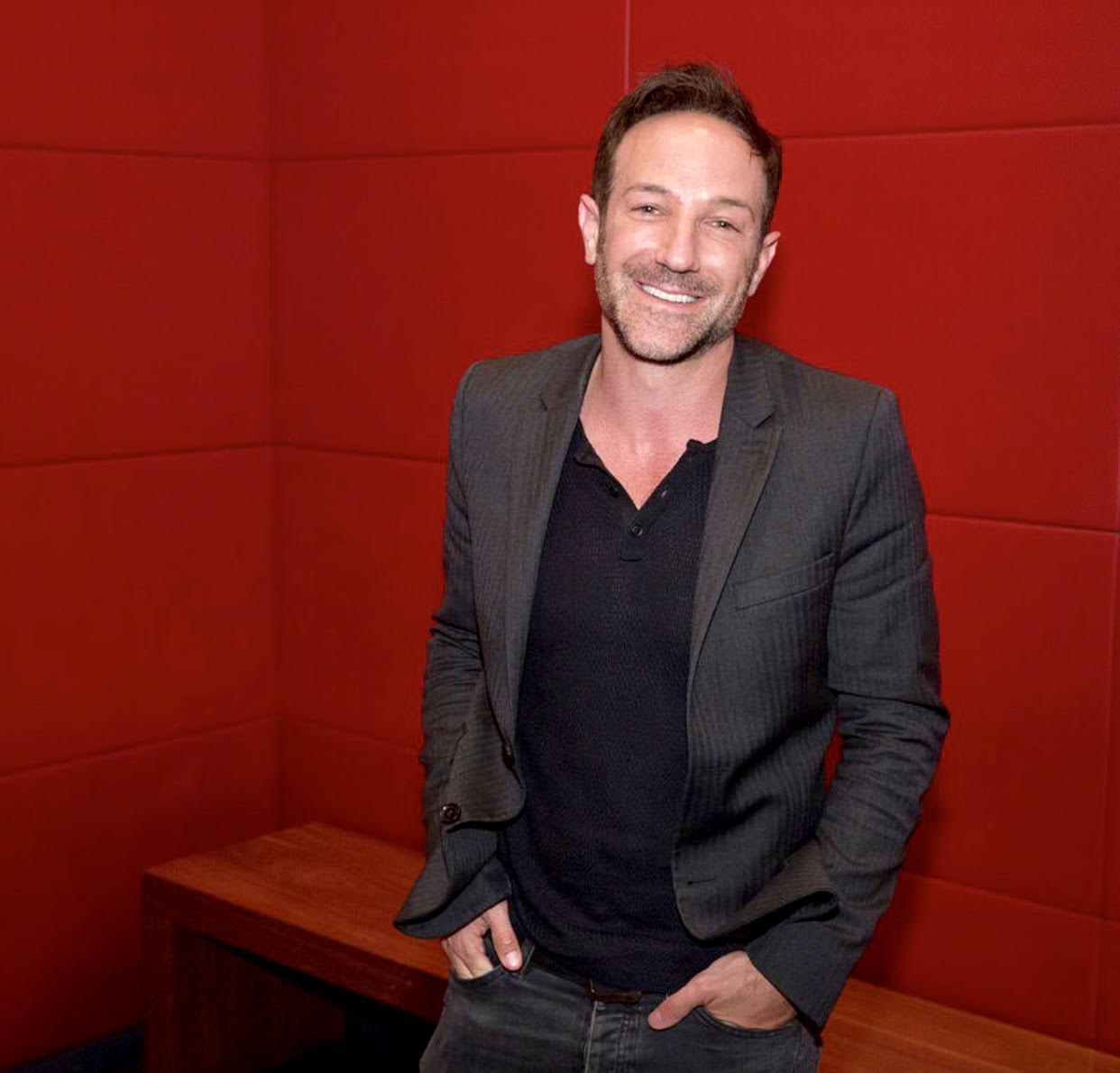
Bryan Fogel is an American film director , producer , author , playwright , speaker, and human rights activist, best known for directing the 2017 documentary Icarus , which began as his personal experiment doping as an amateur cyclist to test anti-doping protocols but uncovered evidence of Russia's state-sponsored Olympic doping program through collaboration with whistleblower Grigory Rodchenkov . Icarus won the Academy Award for Best Documentary Feature in 2018, contributing to international investigations and sanctions against Russian athletes and officials by providing empirical documentation of systemic tampering with urine samples and cover-ups.
Earlier in his career, Fogel co-wrote and starred in the off-Broadway play Jewtopia (2003), a satirical comedy about Jewish-gentile dating dynamics that ran for over 1,000 performances before he adapted it into a 2012 feature film, marking his directorial debut. His subsequent work shifted toward investigative documentaries, including The Dissident (2020), which details the 2018 assassination of Saudi journalist Jamal Khashoggi inside the Saudi consulate in Istanbul, drawing on forensic evidence, witness accounts, and digital surveillance data to implicate Saudi Crown Prince Mohammed bin Salman. Fogel has faced distribution challenges with The Dissident , as major streaming platforms declined acquisition amid concerns over Saudi economic influence, highlighting tensions between commercial interests and exposure of state-sponsored human rights abuses.
Bryan Fogel was born in Denver , Colorado , to a fifth-generation Colorado family of modern Orthodox Jewish heritage. His parents, David Fogel, a lawyer , and Linda Fogel, resided in the Cherry Creek North area. Fogel underwent bar mitzvah ceremonies in both Denver and Jerusalem , reflecting his family's religious observance.
From an early age, Fogel showed strong interest in endurance sports, beginning competitive cycling and ski racing at 13 years old. His cycling pursuits were spurred by Greg LeMond's Tour de France successes, leading him to compete as a rising junior racer until a severe crash resulted in the loss of nine teeth, effectively ending his competitive career.
Fogel attended and graduated from East High School in Denver .
Bryan Fogel attended the Denver Jewish Day School during his early education in Denver , Colorado . He later graduated from East High School in Denver .
Fogel pursued higher education at the University of Colorado Boulder , where he earned a bachelor's degree majoring in sociology and minoring in psychology . These fields of study informed his later investigative approaches to social and psychological dynamics in sports and human behavior, though he transitioned into entertainment and documentary filmmaking post-graduation.
As a pre-teen, Fogel developed an early interest in competitive cycling, inspired by American cyclist Greg LeMond's Tour de France victories in the late 1980s and early 1990s. This passion for endurance sports and performance enhancement shaped his personal experiences with amateur racing and eventually influenced his exploration of doping practices in his documentary work. His Jewish upbringing, reflected in his attendance at a Jewish day school , also fostered interests in cultural identity and humor, which later manifested in satirical projects examining Jewish-American experiences.
Bryan Fogel, an aspiring comedian and actor raised in a Conservadox Jewish household in Denver , Colorado , collaborated with writing partner Sam Wolfson, who grew up in a Reform Jewish family in Florida , to create Jewtopia . The two, both unemployed actor s struggling to break into entertainment , drew inspiration from their shared childhood experiences with Jewish cultural pressures, including parental expectations around dating, marriage, and interfaith relationships, despite their differing upbringings.