Authors & Guests / William S. Burroughs

William S. Burroughs
William Seward Burroughs II (February 5, 1914 – August 2, 1997) was an American writer whose nonlinear, experimental fiction chronicled personal experiences with heroin addiction, homosexual encounters, and expatriate life amid themes of control, entropy, and interdimensionality. A key figure in the Beat Generation alongside Jack Kerouac and Allen Ginsberg , Burroughs drew from his own decades-long opioid dependency—beginning in the 1940s and punctuated by repeated withdrawals and relapses—to produce stark, unflinching accounts in works like the semi-autobiographical Junky (1953, published under pseudonym William Lee ).
His most influential novel, Naked Lunch (1959), assembled from fragmented manuscripts via the cut-up technique —invented by collaborator Brion Gysin in 1959 and involving random slicing and rearrangement of text to disrupt linear causality and reveal subconscious patterns—provoked obscenity trials in the U.S. and Britain that tested limits on literary expression, ultimately affirming protections for avant-garde content. Burroughs's output extended to visual art, spoken-word performances, and cultural critiques, influencing postmodernism , punk aesthetics, and cyberpunk through motifs of viral language and bureaucratic horror, though his reliance on subjective experience over empirical verification often blurred memoir and invention.
A defining personal catastrophe occurred on September 6, 1951, when, intoxicated by marijuana, alcohol, and possibly other substances during a gathering in Mexico City , Burroughs attempted to shoot a glass off the head of his common-law wife Joan Vollmer in a parody of the William Tell legend, fatally wounding her forehead instead; convicted of negligent homicide , he served minimal time before fleeing authorities, an event he later credited as unlocking his literary voice by severing ties to conventional domesticity. This incident, amid chronic addiction and legal evasions across Tangier , Paris , and London , underscored the causal interplay of substance abuse and reckless behavior in his biography, with Vollmer's death erasing a potentially rival intellect from Beat literary history.
William Seward Burroughs II was born on February 5, 1914, in St. Louis , Missouri , into a family of substantial means derived from industrial innovation. His father, Mortimer Perry Burroughs, managed aspects of the family business, while his mother, Laura Hammon Lee, came from a background connected to regional legal and social circles in Missouri . The family's wealth stemmed primarily from Burroughs' paternal grandfather, William Seward Burroughs I , who developed and patented the first commercially viable adding machine in the 1880s, founding the American Arithmometer Company in 1886, which evolved into the Burroughs Corporation .
This inheritance afforded the Burroughs family a privileged existence in St. Louis ' Central West End, where they resided on Pershing Avenue during his early years. In the early 1920s , the family moved to the more suburban Ladue Woods area, providing a setting of manicured lawns, gardens, and domestic stability that Burroughs later characterized as an insulated "comfortable capsule." His childhood unfolded amid this affluence, marked by private schooling and exposure to the Midwest's conservative Protestant ethos, though personal accounts suggest early encounters with the uncanny, such as childhood visions including a diminutive green reindeer . These elements contrasted with the mechanical precision of his grandfather's legacy, foreshadowing Burroughs' later divergence from familial norms.
Burroughs enrolled at Harvard University in 1932 as an English literature major, attending classes until his graduation in 1936 with a Bachelor of Arts degree. During his studies, he audited courses taught by the prominent Shakespeare scholar George Lyman Kittredge, whose lectures covered Elizabethan drama and folklore elements embedded in canonical works.
Books by William S. Burroughs
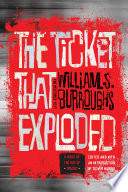
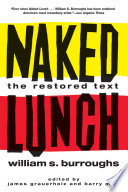
Other works by William S. Burroughs
More books by this author — not yet covered in our podcast catalog.