Authors & Guests / William Gibson

William Gibson
William Ford Gibson (born March 17, 1948) is an American-Canadian writer of speculative fiction and essayist, recognized for originating the cyberpunk subgenre through his depictions of high-tech, low-life futures intertwined with digital networks. Born in Conway, South Carolina , Gibson relocated to Canada in 1968 to evade the U.S. military draft, eventually acquiring Canadian citizenship while retaining American ties.
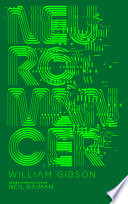
Gibson's breakthrough novel, Neuromancer (1984), introduced the term "cyberspace" to describe a consensual hallucination of immersive virtual reality and won the Hugo Award , Nebula Award , and Philip K. Dick Award , marking the first triple crown in science fiction history for a debut novel . This work, along with stories like "Burning Chrome" (1982), established cyberpunk's core motifs of hacker protagonists, corporate dystopias, and blurred human-machine boundaries, influencing subsequent literature, film, and technology discourse.
Subsequent trilogies, including the Sprawl series ( Count Zero , 1986; Mona Lisa Overdrive , 1988) and the Bridge trilogy ( Virtual Light , 1993; Idoru , 1996; All Tomorrow's Parties , 1999), expanded his exploration of emergent technologies' societal impacts, often presciently anticipating phenomena like widespread internet adoption and surveillance capitalism. Later novels such as Pattern Recognition (2003) shifted toward contemporary "speculative present" narratives, examining post-9/11 globalization and cultural artifacts like viral videos, demonstrating Gibson's evolution from futurism to acute observation of current realities.
William Ford Gibson was born on March 17, 1948, in Conway, South Carolina , to William Ford Gibson Sr., a manager at a construction company, and Otey Gibson, a homemaker. As an only child, his early years were marked by frequent moves across the U.S. South tied to his father's employment, including stints in suburban areas of Tennessee and near Virginia Beach. These displacements instilled a persistent sense of transience that Gibson later described as foundational to his worldview.
At age six, in approximately 1954, Gibson's father died from choking on food during a business trip away from home. The family then relocated to Wytheville, Virginia —his mother's hometown in the Appalachian region—where Gibson spent much of his childhood in a rural setting amid red-brick suburban developments. This abrupt shift, following the loss, prompted young Gibson to retreat into solitary reading, including science fiction works by authors such as Robert A. Heinlein , whose structured future histories provided an escapist contrast to his disrupted personal circumstances.
In 1968, at age 20, William Gibson left the United States for Toronto, Canada, motivated by a desire to avoid potential conscription into the Vietnam War, a conflict that by its conclusion in 1975 had resulted in 58,220 U.S. military fatalities. Gibson later clarified in interviews that while he initially framed his relocation as deliberate draft evasion—a narrative he adopted when beginning his writing career—he had arrived with only a "vague idea" of circumventing the draft and was never formally called up for service, having been overlooked amid the Selective Service System's processes prior to the 1969 draft lottery. His decision reflected a personal calculus of risk avoidance in an era when draft calls escalated dramatically, with over 2.2 million men inducted between 1964 and 1973, yet it contrasted with critiques viewing such exiles as prioritizing individual safety over national obligations during a war framed by some as necessary containment of communism, despite its high human costs and strategic debates. Canada harbored an estimated 30,000 to 50,000 American draft resisters and deserters by war's end, with policies under Prime Minister Pierre Trudeau declining extradition requests solely for evasion, allowing figures like Gibson to integrate without immediate U.S. legal pursuit.
Books by William Gibson
Other works by William Gibson
More books by this author — not yet covered in our podcast catalog.