Authors & Guests / William Dalrymple

William Dalrymple
William Dalrymple (born 20 March 1965) is a Scottish historian, writer, and broadcaster known for his works on South Asian and Islamic history, often drawing on primary archival sources to explore the interactions between European powers and Indian empires. Educated at Ampleforth College and Trinity College, Cambridge, Dalrymple first gained prominence with his travelogue In Xanadu (1989), followed by acclaimed histories such as City of Djinns (1993), which won the Thomas Cook Travel Book Award, and White Mughals (2002), recipient of the Wolfson History Prize for its examination of Anglo-Indian cultural exchanges in 18th-century Hyderabad. His later books, including The Last Mughal (2006), which earned the Duff Cooper Prize, and The Anarchy (2019), critique the East India Company's corporate expansion and its role in destabilizing Mughal India through economic and military means, based on extensive research in Indian and British archives. Dalrymple co-founded the Jaipur Literature Festival in 2006 with Namita Gokhale, establishing it as one of the world's largest literary gatherings, and resides on a farm near Delhi with his wife, the artist Olivia Fraser, and their three children; he has received the British Academy President's Medal (2018) and multiple honorary doctorates for his contributions to historical scholarship.
William Dalrymple, born William Benedict Hamilton-Dalrymple on 20 March 1965 in Edinburgh , Scotland , was the youngest of four sons in an aristocratic Scottish family. His father, Sir Hew Hamilton-Dalrymple (1926–2018), served as the 10th Baronet of North Berwick and Lord Lieutenant of East Lothian , descending from a lineage that had resided on the family estate in North Berwick since 1698. His mother, Lady Anne-Louise Keppel (1932–2017), was the daughter of Walter Keppel, 9th Earl of Albemarle , linking the family to broader British nobility .
Dalrymple spent his early years on the Hamilton-Dalrymple family estate in North Berwick , East Lothian , along the shores of the Firth of Forth . He later described this upbringing as idyllic and sheltered, centered around beach activities like building sandcastles, with limited travel—recalling himself as the last boy in his class to venture abroad. This old-fashioned, happy childhood in a rural coastal setting, far from urban centers, shaped his early worldview before formal schooling.
Dalrymple attended Ampleforth College , a Catholic boarding school in North Yorkshire , England , for his secondary education . He subsequently enrolled at Trinity College, Cambridge , in the mid-1980s, where he pursued a degree in history . There, he distinguished himself academically as the first History Exhibitioner before being elected Senior History Scholar, reflecting his strong performance in historical studies. Dalrymple graduated with a Bachelor of Arts in history from Cambridge.
During his university years, Dalrymple's interest in South Asia deepened; he made his first trip to Delhi in 1984 at age 19, an experience that profoundly shaped his subsequent career in travel and historical writing. His formal education emphasized rigorous historical analysis, but it was complemented by self-directed explorations that bridged academic training with on-the-ground observation.
Dalrymple's early literary influences drew heavily from the genre of travel writing, particularly the works of Eric Newby , Patrick Leigh Fermor , Bruce Chatwin , and Robert Byron, whose immersive narratives of distant cultures inspired his own blend of history and personal journey. These authors encouraged a stylistic approach prioritizing vivid storytelling over detached scholarship, influencing Dalrymple's transition from student to prolific author without formal mentorships explicitly noted in his background.
Books by William Dalrymple
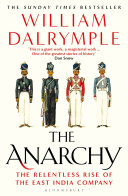
Other works by William Dalrymple
More books by this author — not yet covered in our podcast catalog.