Authors & Guests / Tony Schwartz
Tony Schwartz
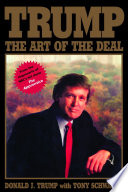
Tony Schwartz is an American writer, journalist, and business consultant best known for co-authoring Donald Trump's 1987 bestseller The Art of the Deal , which he has described as primarily his own work based on extensive interviews and observation of Trump. Beginning his career in journalism as a reporter for The New York Times , an associate editor at Newsweek , and a staff writer for New York magazine and Esquire , Schwartz later transitioned to business writing and consulting. In 2003, he founded The Energy Project, a firm that advises companies and leaders on managing human energy to enhance performance and sustainability, delivering keynotes and coaching to organizations including Google, Apple, and Microsoft. Schwartz has authored or co-authored several influential books on productivity and leadership, including the New York Times bestseller The Power of Full Engagement: Managing Energy, Not Time (co-written with Jim Loehr, which spent 28 weeks on the list) and The Way We're Working Isn't Working , emphasizing rhythmic energy renewal over endurance. A University of Michigan graduate, he has contributed articles to outlets such as The New York Times , Harvard Business Review , and Forbes , focusing on workplace dynamics and executive effectiveness. His collaboration with Trump propelled the real estate developer's public image but later drew Schwartz's public criticism, including admissions of regret over amplifying Trump's persona amid observed personal shortcomings like limited attention span.
Tony Schwartz was born on May 2, 1952, in New York City and raised in Manhattan within a bourgeois, intellectual family environment. He attended elite private schools during his upbringing, though his family was not as affluent as some of his classmates, lacking resources such as a trust fund and contending with financial pressures.
Schwartz's parents instilled a strong ethos of self-reliance , repeatedly conveying to him that he would need to forge his own path without familial safety nets, as he later reflected: "I grew up privileged... But my parents made it clear: ‘You’re on your own.’" This dynamic fostered an early sense of independence amid the intellectual milieu of his home. His formative interests gravitated toward literary nonfiction, with admiration for authors like Tom Wolfe , John McPhee , and David Halberstam , whose immersive reporting styles anticipated his own pursuits in journalism and close observation of human behavior .
Schwartz earned a Bachelor of Arts degree in American Studies from the University of Michigan in 1974, graduating Phi Beta Kappa with honors.
Following graduation, Schwartz entered journalism in 1975, initially working as a reporter for The New York Times , where he honed foundational reporting skills through daily news assignments. He subsequently joined Newsweek as an associate editor by the late 1970s, contributing to editorial processes that emphasized fact-checking and narrative construction essential for investigative work.
Schwartz's early roles extended to staff writing positions at New York magazine and Esquire , platforms that allowed him to develop deeper proficiency in long-form feature writing and source cultivation, bridging basic reporting toward more analytical journalism. These experiences in high-profile outlets during the 1970s and early 1980s built his expertise in structuring complex stories from primary interviews and archival research, laying the groundwork for later collaborative projects.
Schwartz entered professional journalism in the mid-1970s, securing his first reporting role at the New York Post , where he covered urban development and real estate stories, including Donald Trump's efforts to gain approval for Trump Tower in 1976. This beat exposed him to the intricacies of New York City's business and regulatory environments, grounding his work in on-the-ground observations of power dynamics and deal-making processes.