Authors & Guests / Toby Ord

Toby Ord
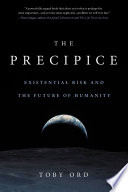
Toby Ord is an Australian-born moral philosopher and researcher specializing in existential risks to humanity and the effective altruism movement. Ord founded Giving What We Can in 2009, an organization that pledges members to donate at least 10% of their lifetime income to cost-effective charities addressing global poverty and other pressing issues, inspired by utilitarian ethics and empirical evaluation of interventions. He co-founded the Centre for Effective Altruism, which supports initiatives like 80,000 Hours for career advice aimed at maximizing positive impact. As a senior researcher formerly at Oxford University's Future of Humanity Institute and currently at the Oxford Martin AI Governance Initiative, Ord focuses on long-term threats such as artificial intelligence misalignment, biotechnology risks, and climate extremes, emphasizing the moral imperative to safeguard humanity's potential future. In his 2020 book The Precipice: Existential Risk and the Future of Humanity , he estimates a one-in-six probability of human extinction or irreversible civilizational collapse within the next century, drawing on probabilistic analysis of historical trends and emerging technologies. Ord has advised international bodies including the United Nations, World Health Organization, and World Economic Forum on risk mitigation strategies.
Toby David Godfrey Ord was born on July 18, 1979, in Melbourne, Australia. He was raised in Melbourne, where his early years were influenced by his family's engagement with social and environmental issues.
Ord's parents participated in anti-nuclear marches during the Cold War era, often taking him along to protests against nuclear weapons. This exposure introduced him to concerns about global catastrophic risks at a young age, fostering an early awareness of humanity's vulnerability to large-scale threats.
Ord earned a Bachelor of Arts in philosophy and a Bachelor of Science with first-class honours in computer science from the University of Melbourne , completing both degrees between 1997 and 2002. Initially drawn to technical fields through his computer science studies, Ord shifted focus toward philosophical inquiry during his undergraduate years, developing an interest in ethical decision-making that would define his later work.
In 2003, Ord moved to the University of Oxford for graduate studies, where he obtained a BPhil in philosophy before pursuing a DPhil from 2005 to 2009 at Balliol College and Christ Church. His doctoral thesis , titled Beyond Action: Applying Consequentialism to Decision Making and Motivation , examined how consequentialist frameworks could extend beyond overt actions to influence broader motivational structures and decision processes, submitted in 2009.
Ord's philosophical development at Oxford was profoundly shaped by Derek Parfit, under whose supervision he completed his DPhil; Parfit's Reasons and Persons (1984) provided a foundational influence, prompting Ord to prioritize impartial ethical reasoning and long-term consequences in moral philosophy. This mentorship reinforced Ord's commitment to analytical rigor, evident in his early explorations of population ethics and decision theory, which emphasized deriving ethical conclusions from fundamental principles rather than unexamined intuitions.
Ord's academic appointments at Oxford University commenced during his graduate studies, with formal research roles beginning shortly thereafter. He served as a Research Associate at the Future of Humanity Institute from 2006 to 2014, overlapping with his doctoral work and early postdoctoral phase. In 2009, following completion of his DPhil in Philosophy, he was appointed Junior Research Fellow at Balliol College, a position he held until 2012. Concurrently, from 2009 to 2012, Ord held a Postdoctoral Research Fellowship funded by the British Academy.
Books by Toby Ord
Other works by Toby Ord
More books by this author — not yet covered in our podcast catalog.