Authors & Guests / Thomas S. Kuhn
Thomas S. Kuhn
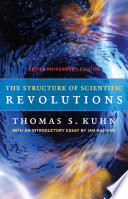
Thomas Samuel Kuhn (1922–1996) was an American historian and philosopher of science renowned for his influential analysis of how scientific knowledge develops through discontinuous revolutions rather than steady accumulation. His landmark book, The Structure of Scientific Revolutions (1962), introduced key concepts such as paradigms —shared frameworks of theories, methods, and assumptions that guide "normal science "—and paradigm shifts , abrupt changes triggered by accumulating anomalies that resolve crises in scientific understanding. This work challenged traditional views of scientific progress as linear and cumulative, proposing instead a cyclical model involving periods of puzzle-solving within established paradigms followed by revolutionary upheavals. Kuhn's ideas, drawn from historical case studies like the Copernican revolution , emphasized the role of community consensus and incommensurability between competing paradigms, profoundly impacting fields beyond science , including sociology , education , and cultural studies .
Born on July 18, 1922, in Cincinnati , Ohio , Kuhn initially trained as a physicist , earning his bachelor's, master's, and doctoral degrees from Harvard University in 1943, 1946, and 1949, respectively. His early career involved wartime radar research and teaching physics, but a transformative encounter with historical texts on scientific thought—prompted by Harvard president James Bryant Conant—shifted his focus to the history and philosophy of science . Kuhn's first major book, The Copernican Revolution: Planetary Astronomy in the Development of Western Thought (1957), explored the shift from Ptolemaic to heliocentric models, laying groundwork for his later theories.
Kuhn held academic positions at Harvard (1951–1956), the University of California, Berkeley (1956–1964), Princeton University (1964–1979), and the Massachusetts Institute of Technology (1979–1991), where he served as the Laurance S. Rockefeller Professor of Philosophy until his retirement. Among his later works, Black-Body Theory and the Quantum Discontinuity, 1894–1912 (1978) applied his paradigm framework to the origins of quantum mechanics . Elected to the National Academy of Sciences in 1979, Kuhn received numerous honorary degrees and shaped generations of scholars through his emphasis on science as a social and historical enterprise. He died on June 17, 1996, in Cambridge, Massachusetts , from lung cancer , leaving a legacy as one of the 20th century's most cited thinkers in the philosophy of science .
Thomas Samuel Kuhn was born on July 18, 1922, in Cincinnati , Ohio , to Samuel L. Kuhn, a hydraulic engineer trained at Harvard and MIT who later worked as an industrial engineer and investment consultant, and Minette Stroock Kuhn, a Vassar College graduate from a wealthy New York family whom Kuhn later described as "the intellectual in the family." The family was of Jewish descent but non-observant and non-practicing, with progressive, left-leaning political values that emphasized intellectual curiosity and liberal education ; they were also relatively prosperous despite the economic challenges of the era. Kuhn had a younger brother, Roger, born in 1925.
When Kuhn was just six months old, the family relocated to Manhattan , New York, where his mother's affluent roots provided a stable urban environment that shaped his formative years through access to progressive educational opportunities. From kindergarten through fifth grade (1927–1933), he attended the Lincoln School in Manhattan , a private progressive institution affiliated with Teachers College, Columbia University , which prioritized independent thinking, student autonomy, and intellectual exploration over rote learning and traditional content drills. This schooling reflected the Kuhn family's liberal progressiveness, fostering an early environment of curiosity and critical inquiry that influenced his worldview.
Books by Thomas S. Kuhn
Other works by Thomas S. Kuhn
More books by this author — not yet covered in our podcast catalog.