Authors & Guests / Thich Nhat Hanh

Thich Nhat Hanh
Thích Nhất Hạnh (11 October 1926 – 22 January 2022) was a Vietnamese Zen Buddhist monk, scholar, poet, and peace activist renowned for founding the concept of engaged Buddhism, which integrates mindfulness practice with social action to address suffering caused by war, injustice, and environmental degradation. Born Nguyễn Xuân Bảo in Huế, central Vietnam, he entered monastic life at age 16 at Tu Hieu Temple and later studied in Vietnam and abroad, establishing institutions like Van Hanh Buddhist University and the School of Youth for Social Services to aid war victims during the Vietnam conflict. Exiled from South Vietnam in 1966 for his non-partisan calls for peace, he founded the Plum Village Monastery in France in 1982, expanding a global network of practice centers that emphasize communal living, meditation, and ethical engagement; he authored over 130 books translating ancient teachings into accessible language on interbeing and mindful living. His advocacy earned a Nobel Peace Prize nomination from Martin Luther King Jr. in 1967, though some critiques later portrayed his teachings as overly simplified or accommodating to political authorities upon his 2005 return to Vietnam.
Thích Nhất Hạnh was born Nguyễn Xuân Bảo on October 11, 1926, in Huế , the ancient imperial capital of central Vietnam . His birth occurred during the French colonial period in Annam, amid a backdrop of traditional Vietnamese society influenced by Confucianism , Buddhism , and imperial administration.
He was the fifth of six children in a large, privileged Buddhist family, which provided an environment steeped in religious and cultural traditions. His father, Nguyễn Đình Phúc, originated from Thành Chương village in Thừa Thiên Province and served as an official in the imperial government, reflecting a scholarly and administrative heritage. His mother, Nguyễn Thị Thanh, was a native of Huế , contributing to the family's rootedness in the region's historical and spiritual center. While some secondary accounts suggest a birthplace in Quảng Ngãi Province , primary biographical sources affiliated with his teachings affirm Huế as the location, consistent with the family's ties to the area.
Thích Nhất Hạnh entered Tu Hieu Temple in Huế , Vietnam , as a novice monk in 1942 at the age of sixteen, receiving the monastic name Thich Nhat Hanh upon ordination into the novitiate . The temple, rooted in the Vietnamese Zen (Thiền) tradition of the Linji school , provided his foundational exposure to Mahayana Buddhism practices, including mindfulness integrated into daily activities such as manual labor and recitation of gāthās (short verses for mindful awareness).
His initial training at Tu Hieu emphasized disciplined communal living and meditative discipline under elder monks, fostering a practical approach to Zen that viewed everyday tasks—walking, eating , and working—as opportunities for enlightenment rather than separate from formal sitting meditation . This period lasted several years, during which he deepened his study of Vietnamese Thiền Buddhism , blending scriptural learning with experiential practice in a monastic environment shaped by pre-war Vietnamese Buddhist revivalism.
In 1949, at age 23, Thich Nhat Hạnh received full monastic ordination as a bhikṣu, marking his commitment to the vinaya precepts and formal entry into the sangha as a fully ordained monk . Following this, he pursued further studies at Báo Quốc Buddhist Academy, where he engaged with advanced Mahayana doctrines and Thiền lineages, though he later critiqued institutional education for insufficient emphasis on direct meditation and philosophical depth. These early years solidified his synthesis of traditional Zen with accessible, engaged practice, influencing his lifelong teachings.
Books by Thich Nhat Hanh
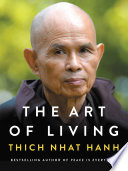
Other works by Thich Nhat Hanh
More books by this author — not yet covered in our podcast catalog.