Authors & Guests / Sir Arthur Conan Doyle

Sir Arthur Conan Doyle
Sir Arthur Ignatius Conan Doyle (22 May 1859 – 7 July 1930) was a Scottish-born physician and author renowned for his creation of the fictional detective Sherlock Holmes. Trained in medicine at the University of Edinburgh, Doyle practiced as a doctor before turning to writing full-time, producing detective fiction that emphasized logical deduction and forensic observation. His Holmes stories, beginning with A Study in Scarlet in 1887, achieved immense popularity and established him as a master of the genre, influencing modern crime literature and detection methods.
Beyond detective tales, Doyle authored historical novels such as The White Company (1891) and science fiction adventures featuring the irascible Professor Challenger, most notably The Lost World (1912), which depicted a prehistoric plateau surviving into the present. He was knighted in 1902 for his services during the Second Boer War, where he volunteered as a medical officer and defended British conduct in pamphlets like The Great Boer War , countering anti-imperial criticisms prevalent in some European press. Later in life, Doyle became a prominent advocate for spiritualism following personal losses in World War I, promoting mediums and phenomena such as the Cottingley Fairies photographs, which he endorsed as genuine evidence of the supernatural despite later revelations of their fabrication by young girls using paper cutouts. This commitment drew skepticism and ridicule, contrasting sharply with the empirical rigor of his Holmes character and highlighting a divide between his rational fiction and credulous personal beliefs. Doyle also campaigned for miscarriages of justice, applying Holmes-like scrutiny to cases like that of Oscar Slater, contributing to legal reforms.
Arthur Ignatius Conan Doyle was born on 22 May 1859 in Edinburgh, Scotland, to parents of Irish Catholic descent. His father, Charles Altamont Doyle (1832–1893), was an English-born artist and civil servant employed by the Scottish Office of Works as a draughtsman and clerk, whose work included architectural drawings and watercolours depicting Scottish scenes. Charles's family originated from Irish Catholic stock, with artistic inclinations evident in relatives like uncles James and Henry Doyle, who were illustrators for Punch magazine.
His mother, Mary Josephine Elizabeth Foley (1837–1920), was Irish-born and known for her strong storytelling abilities, which profoundly influenced her son's imaginative development and narrative style; she recounted family histories and legends to Arthur during his childhood. The Doyles initially enjoyed a middle-class existence in Edinburgh, supported by Charles's government salary, though underlying financial strains emerged due to his growing alcoholism and erratic behavior, which later necessitated his institutionalization in 1881.
The couple had nine children, with Arthur as the second-born but eldest surviving son among seven sisters—Annette, Katherine, Mary, Louise, Jane, and two others—and one younger brother, John Francis Innes Hay Doyle (1873–1920), who suffered from epilepsy and was institutionalized young. Mary Foley managed the household amid these challenges, taking in boarders and drawing on relatives' support to maintain stability after Charles's decline, demonstrating resilience that Arthur later credited for shaping his sense of duty. The family's Catholic faith, though not strictly observed by Arthur in adulthood, provided a cultural framework, with maternal relatives including a grandmother who hosted figures like writer William Maginn.
Doyle commenced his formal schooling at age seven in 1866 at Newington Academy, a day school in Edinburgh, where he received a basic education amid his family's growing financial difficulties. Financial assistance from wealthier relatives enabled him to transfer at age nine to Hodder Place, the Jesuit preparatory school affiliated with Stonyhurst College in Lancashire, England, attending from 1868 to 1870.
Books by Sir Arthur Conan Doyle
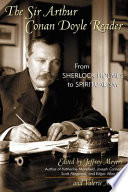
Other works by Sir Arthur Conan Doyle
More books by this author — not yet covered in our podcast catalog.