Authors & Guests / Simon Singh

Simon Singh
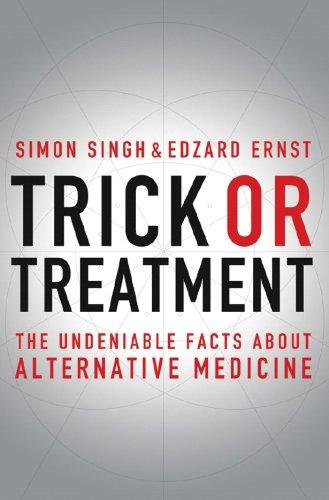
Simon Singh (born 19 September 1964) is a British science author, journalist, and broadcaster specializing in mathematics and physics. After earning a PhD in particle physics from the University of Cambridge and conducting research at CERN, Singh produced science documentaries for the BBC, including the BAFTA-winning Horizon episode on Fermat's Last Theorem. His bestselling books, such as Fermat's Enigma (1997), which details the centuries-long quest to prove Fermat's Last Theorem, and The Code Book (1999), exploring the history and science of cryptography, have made complex topics accessible to general readers. Singh has advocated for scientific skepticism and evidence-based approaches, co-authoring Trick or Treatment (2008) with Edzard Ernst to scrutinize alternative medicine claims using clinical trial data. A defining moment in his career was the 2008–2010 libel case brought by the British Chiropractic Association against an article he wrote questioning chiropractic treatments for childhood conditions like asthma and colic as "bogus"; the Court of Appeal ruled in his favor, interpreting his words as fair comment protected by Reynolds privilege, which catalyzed reforms to England's libel laws to better safeguard scientific discourse.
Simon Singh was born on 19 September 1964 in Wellington, Somerset , England , to parents of Punjabi Indian origin. His family had been farmers for generations in Punjab, India , with his grandfather emigrating from the village of Thakarki to settle in Somerset in 1938. Singh's parents themselves migrated from Punjab to Britain in 1950, establishing a household that emphasized education and practical curiosity.
Growing up in rural Somerset as the youngest of three brothers, Singh attended Wellington School, where his early exposure to science stemmed from familial encouragement. His mother stressed the value of formal education , while his father fostered an interest in mechanics and engineering by demonstrating how devices functioned. A sister further reinforced academic discipline by overseeing his homework completion, contributing to a household environment that prioritized intellectual development over other pursuits.
These influences aligned with Singh's childhood ambition to pursue a scientific career, particularly in physics, reflecting a blend of immigrant parental aspirations for upward mobility through knowledge and hands-on paternal guidance in problem-solving. Despite the family's modest farming roots and post-migration adjustments in Britain, this upbringing instilled a foundational drive toward empirical inquiry that later shaped his work in science communication.
Singh earned a Bachelor of Science degree in physics from Imperial College London .
He subsequently pursued graduate studies in particle physics at the University of Cambridge , completing a Doctor of Philosophy degree in 1990.
Singh's doctoral research focused on experimental particle physics and was primarily conducted at the European Organization for Nuclear Research ( CERN ) in Geneva , Switzerland , where he spent the majority of his three-year program.
After completing his PhD in particle physics at the University of Cambridge in 1990, with research conducted primarily at CERN , Singh opted against a traditional academic or research career, citing his longstanding interest in explaining scientific concepts to broader audiences. This pivot marked his entry into science communication , leveraging his technical expertise to bridge complex ideas with public engagement.
In 1990, Singh joined the BBC Science Department as an assistant producer, director, and producer, initially contributing to the long-running technology magazine program Tomorrow's World on BBC1. His work there involved scripting and producing segments on emerging scientific and technological developments, honing skills in distilling intricate topics for television viewers.