Authors & Guests / Siddharth Kara

Siddharth Kara
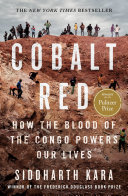
Siddharth Kara is a researcher, author, and academic specializing in human trafficking and modern slavery, renowned for conducting over two decades of field investigations across more than 50 countries to document and analyze contemporary forced labor systems. Kara holds the positions of British Academy Global Professor and Rights Lab Associate Professor of Human Trafficking and Modern Slavery at the University of Nottingham, where he focuses on measurement, geographies, and supply chain tracing in exploitative industries such as cobalt mining in the Democratic Republic of the Congo. Earlier in his career, he directed the Program on Human Trafficking and Modern Slavery at Harvard Kennedy School and introduced the school's first course on human trafficking in 2012. His publications include a trilogy on modern slavery— Sex Trafficking: Inside the Business of Modern Slavery (2009), which earned the Frederick Douglass Book Prize; Bonded Labor: Tackling the System of Slavery in South Asia (2012); and Modern Slavery: A Global Perspective (2017)—as well as Cobalt Red: How the Blood of the Congo Powers Our Lives (2023), a New York Times bestseller and Pulitzer Prize finalist that details child labor, health hazards, and environmental damage in artisanal cobalt extraction. Kara advises United Nations agencies, governments, and corporations on anti-slavery policies and has testified before U.S. congressional committees, with his early work on sex trafficking adapted into the feature film Trafficked . Although his empirical fieldwork has elevated global awareness of hidden abuses in global supply chains, some critiques of Cobalt Red argue that it emphasizes victimhood over local agency and complexities in Congolese artisanal mining practices.
Siddharth Kara was born in Knoxville, Tennessee , to Indian parents—one of Hindu background and the other Parsi. His father, of Indian origin, was raised in South Africa , while his mother, of Parsi (Zoroastrian Persian) descent, grew up in Bombay (now Mumbai ), India . Kara's upbringing occurred primarily in the United States, where he developed an early interest in global issues potentially influenced by his multicultural family heritage, though specific details on family dynamics or parental occupations remain undocumented in public sources.
Siddharth Kara obtained a Bachelor of Arts degree in English and Philosophy from Duke University . He later earned a Master of Business Administration from Columbia University . Following his MBA, Kara pursued legal studies, receiving a law degree from BPP Law School in London . These qualifications positioned him initially for a career in finance and investment banking , reflecting a conventional path blending humanities , business acumen , and legal expertise.
Kara's pivot toward human rights advocacy stemmed from direct encounters with exploitation during his early professional travels. In 1995, while visiting a Bosnian refugee camp amid the aftermath of the Yugoslav conflicts, he witnessed firsthand instances of human trafficking , marking a formative influence that reshaped his worldview and career trajectory. This exposure, occurring post his formal education but pre his full immersion in anti-slavery research, underscored the persistence of coercive labor practices in conflict zones and ignited his commitment to empirical investigation of modern slavery, diverging from his business-oriented training.
Kara entered the finance sector after completing his MBA from Columbia University , joining Merrill Lynch in New York City as an investment banker in the late 1990s . He worked there for several years, focusing on mergers and acquisitions transactions, including participation in some of the firm's largest deals during a period of heightened M&A activity in sectors such as telecommunications and technology . This role exposed him to the mechanics of high-stakes corporate finance , deal structuring, and market dynamics amid the dot-com boom.
Books by Siddharth Kara
Other works by Siddharth Kara
More books by this author — not yet covered in our podcast catalog.