Authors & Guests / Seamus Heaney (Translator)

Seamus Heaney (Translator)
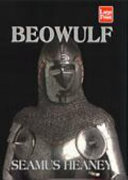
Seamus Heaney (13 April 1939 – 30 August 2013) was an Irish poet, playwright , translator, and lecturer renowned for his lyrical explorations of rural life, personal memory, and the historical violence of Northern Ireland . Born the eldest of nine children in a Catholic farming family near Castledawson in County Derry, Northern Ireland , he grew up amid the sensory details of bogland and fieldwork that permeated his early poetry. Educated at Queen's University Belfast , Heaney's debut collection Death of a Naturalist (1966) marked his breakthrough, capturing the transformative wonder and menace of the natural world through precise, tactile language. His 1995 Nobel Prize in Literature recognized "works of lyrical beauty and ethical depth, which exalt everyday miracles and living past," affirming his mastery in bridging personal experience with broader cultural and political upheavals, including the Irish Troubles. Key later volumes like North (1975) employed archaeological bog bodies as metaphors for buried histories and sectarian strife, though some critics faulted this approach for potentially romanticizing atrocity rather than directly confronting its causality. Heaney's translation of Beowulf (1999) revitalized the Old English epic with rhythmic vigor drawn from his own poetic roots, earning acclaim for making ancient heroism accessible without dilution. Throughout his career, spanning lectureships at institutions like Harvard University from 1985, Heaney navigated fame's demands while resisting reductive political labels, prioritizing the poet's vocation to unearth truth from the particular over ideological abstraction.
Seamus Heaney was born on April 13, 1939, at the family farmhouse named Mossbawn, situated two miles from Castledawson in County Derry, Northern Ireland . He was the eldest of nine children in a Catholic family of Irish Gaelic descent.
His father, Patrick Heaney (1901–1986), worked as a cattle dealer and managed a small farm of approximately 40 acres, engaging in the seasonal routines of livestock herding , threshing , and haymaking that defined rural existence in mid-20th-century Ulster . Patrick supplemented farm income through cattle trading at nearby markets like Bellaghy and Magherafelt , reflecting the economic necessities of smallholder families in the region. His mother, Margaret Kathleen McCann (1911–1984), known as "Totti," originated from a family with ties to small-scale farming and the local linen industry, where her relatives operated as weavers and mill workers amid the decline of Ulster's flax economy .
Heaney's early childhood unfolded amid the sensory details of farm life at Mossbawn, including the sounds of turf-cutting, the labor of potato digging, and interactions with extended kin who shared the household, such as aunts and farmhands. The home served as a communal space for family gatherings, storytelling , and Irish-language phrases preserved from prior generations, fostering an environment steeped in oral tradition despite the predominance of English in daily use. In 1953, when Heaney was 14, the family relocated to a larger farm called The Wood near Bellaghy , inherited by his father from a relative, marking a shift to more stable acreage but continuing the demands of agrarian self-sufficiency.
These formative years immersed Heaney in the physical and cultural textures of rural Northern Ireland , where Catholic smallholders navigated post-partition economic constraints and community ties, without the direct upheavals of urban industrialization. The household's blend of manual toil and domestic narratives—ranging from his mother's recited poems to his father's taciturn practicality—provided the raw material for his later reflections on inheritance and place, though unadorned by formal literary ambition in youth.