Authors & Guests / S. C. Gwynne

S. C. Gwynne
S. C. Gwynne is an American author and journalist renowned for his historical nonfiction on pivotal episodes in U.S. history, including the Comanche empire and the Civil War. Born in Massachusetts and raised in Connecticut , he earned a bachelor's degree in history from Princeton University in 1974 and a master's in writing from Johns Hopkins University . His career began as a French teacher and international banker before transitioning to journalism , where he served as a correspondent and bureau chief for Time magazine and later as executive editor at Texas Monthly from 2000 to 2008. Gwynne's investigative reporting earned him prestigious accolades, such as the Gerald Loeb Award for a series on the BCCI banking scandal, the Jack Anderson Award for investigative journalism, and the National Headliners Award.
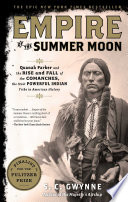
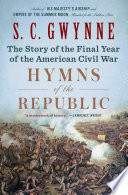
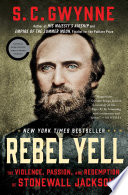
Among his most notable works is Empire of the Summer Moon (2010), a chronicle of the Comanche nation and Quanah Parker that spent 82 weeks on the New York Times bestseller list, was a finalist for the Pulitzer Prize and the National Book Critics Circle Award , and won the Texas Book Award. This was followed by Rebel Yell (2014), a biography of Confederate general Stonewall Jackson that also became a New York Times bestseller and finalist for the National Book Critics Circle Award and PEN Literary Award. Subsequent books include Hymns of the Republic (2019), detailing the final year of the Civil War, and His Majesty's Airship (2023), exploring the British airship R101 disaster. Gwynne resides in Austin, Texas , with his wife, artist Katie Maratta.
S. C. Gwynne was born in Worcester, Massachusetts . He spent much of his childhood and formative years in New Canaan, Connecticut , an affluent suburb known for its residential character and proximity to New York City . Limited public details exist regarding his immediate family , with no verified accounts of his parents' professions or siblings influencing his early development. His upbringing in New Canaan provided a stable, upper-middle-class environment typical of the area's demographics during the mid-20th century, though specific personal anecdotes from this period remain undocumented in accessible sources.
Gwynne earned a bachelor's degree in history from Princeton University in 1974. Following undergraduate studies, he secured a fellowship to the Johns Hopkins Writing Seminars, where he obtained a Master of Arts in fiction. There, he studied under the acclaimed novelist John Barth , whose postmodern techniques likely shaped his early creative approaches, though Gwynne later pivoted from fiction to nonfiction.
Post-graduation, Gwynne's formal academic involvement was limited; his first professional role was teaching French at a private school, marking a brief foray into education before transitioning to journalism and banking. This period underscored his foundational training in historical analysis from Princeton and narrative craft from Johns Hopkins, informing his later historical nonfiction.
Key literary influences on Gwynne included F. Scott Fitzgerald, Ernest Hemingway, Wallace Stegner, Hunter S. Thompson, Joan Didion, and Tom Wolfe, whose styles of vivid prose, immersive reporting, and cultural critique resonated with his development as a writer. He credited much of his refinement in clarity and structure not to academic mentors but to editorial guidance during his 12 years at Time magazine, emphasizing provocative leads and seamless transitions over theoretical abstraction. These elements, combined with his history degree's focus on empirical evidence and causality, grounded his eventual authorship in rigorous, source-driven historical narrative rather than speculative interpretation.
Gwynne transitioned into journalism in the late 1970s or early 1980s after brief stints as a French teacher at a private school and as an international banker, during which he began writing short stories, screenplays, and journalistic pieces.
Books by S. C. Gwynne
Other works by S. C. Gwynne
More books by this author — not yet covered in our podcast catalog.