Authors & Guests / Russell Targ

Russell Targ
Russell Targ (born April 11, 1934) is an American physicist and author noted for pioneering advancements in laser technology and for initiating government-sponsored research into remote viewing and extrasensory perception during the Cold War . With a B.S. in physics from Queens College and graduate studies at Columbia University , Targ contributed to early laser applications at firms including Technical Research Group and Sylvania Electric Products , earning two NASA awards for innovations in lasers and laser communications. In 1972, he co-founded a parapsychology program at Stanford Research Institute (SRI) with Harold Puthoff, coining the term " remote viewing " to describe apparent non-local perception of distant or hidden targets, which received CIA funding as part of the Star Gate initiative spanning over two decades and millions in expenditure. While Targ's laser work garnered mainstream recognition, his ESP experiments—published in journals such as Nature and IEEE Proceedings —have faced skepticism from scientific bodies; reviews by the National Research Council in 1988 and the American Institutes for Research in 1995 found the results lacked replicability and practical intelligence value, leading to program termination despite anecdotal operational successes claimed by proponents. Targ, who retired as a senior scientist from Lockheed Martin in 1998 after developing laser -based wind shear detection systems, has authored books including Mind-Reach (1977) and Do You See What I See? (2010), advocating for psi phenomena grounded in quantum non-locality interpretations, though these views remain peripheral to consensus physics.
Russell Targ was born on April 11, 1934, in Chicago, Illinois, to William Targ, a prominent book editor whose family name derived from the Polish Torgownik. William Targ worked for publishers such as World and G.P. Putnam's Sons , editing works by authors including Saul Bellow and Mario Puzo , whose novel The Godfather he shepherded to publication. Targ's father, a secular Jew, showed no interest in mystical or paranormal topics, reflecting a rationalist household orientation.
Targ experienced childhood during the Great Depression , initially in Chicago before the family relocated to Cleveland , Ohio , when he was nine years old, and subsequently to New York City two years later. From an early age, he contended with legal blindness stemming from congenital extreme nearsightedness and prosopagnosia , a condition impairing facial recognition, which shaped his perceptual experiences. In his early teens, a classmate named Robert Rosenthal introduced him to ESP testing via Zener cards , igniting Targ's enduring curiosity about expanded awareness and phenomena beyond ordinary senses. He also developed an interest in stage magic during this period.
Targ received a baccalaureate degree in mathematics and physics from Queens College in New York in 1954. He subsequently undertook postgraduate studies in physics at Columbia University, commencing in 1954 and continuing until May 1956 without earning an advanced degree.
Following his graduate coursework, Targ entered professional employment in physics research. In May 1956, he joined Sperry Gyroscope Company in Great Neck, New York, where he specialized in plasma physics, designing and constructing high-powered microwave tubes until 1958. From 1958 to 1961, he transferred to the Technical Research Group on Long Island, New York, engaging in pioneering attempts to develop laser technology. In 1961, Targ relocated to California to accept a position in the laser laboratory at Sylvania Electric (later GTE Sylvania) in Palo Alto, serving in roles focused on laser communications, guidance systems, and related applications through 1972.
Russell Targ conducted early research on laser technologies during the 1960s at Sylvania Electronic Systems in Mountain View, California , where he helped establish one of the largest laser laboratories on the West Coast.
Books by Russell Targ
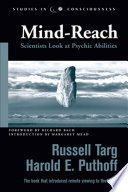
Other works by Russell Targ
More books by this author — not yet covered in our podcast catalog.