Authors & Guests / Rupert Sheldrake
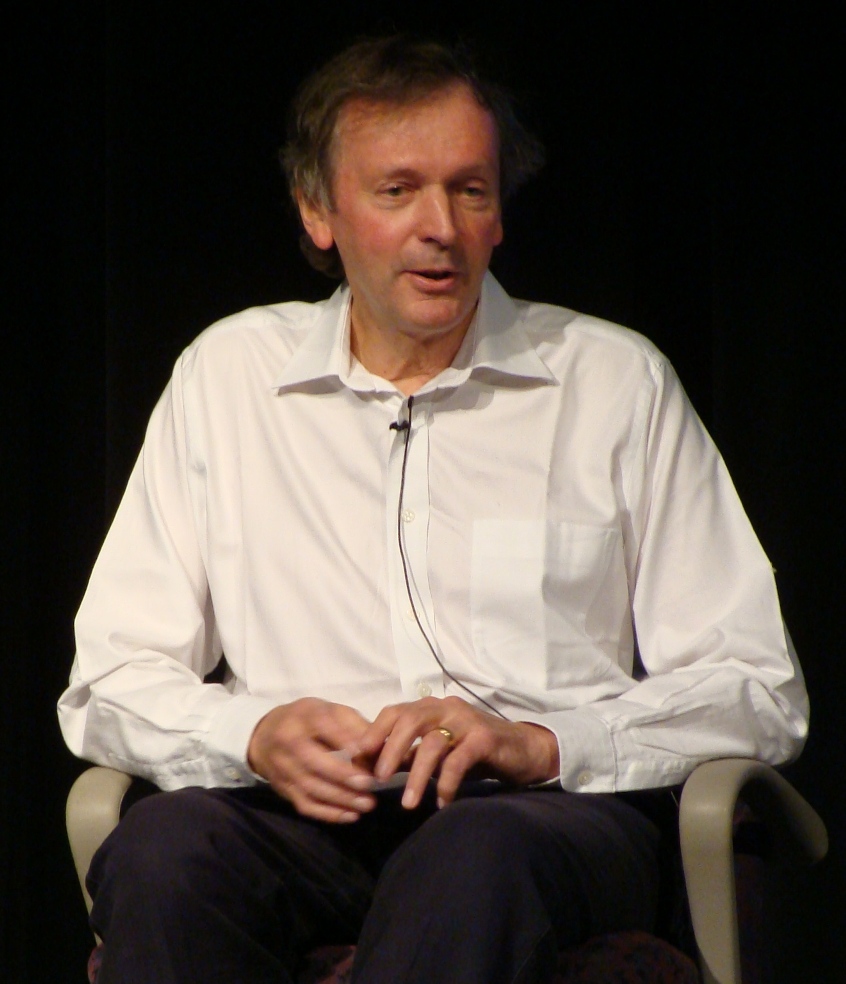
Rupert Sheldrake
Rupert Sheldrake (born 28 June 1942) is an English biologist and author best known for developing the hypothesis of morphic resonance, a theory positing that memory is inherent in nature and that similar patterns of activity within self-organizing systems are influenced by those from the past, forming collective "habits" rather than fixed laws.
Born in Newark-on-Trent , Nottinghamshire , Sheldrake was educated at Newark Preparatory School, Ranby House School, and Worksop College before attending Clare College, Cambridge . After earning a BA in natural sciences from Clare College, Cambridge , in 1963 with double first-class honours, Sheldrake spent 1963–1964 as a Frank Knox Fellow at Harvard University studying the philosophy and history of science . He then completed his PhD in biochemistry at Cambridge in 1967 for his thesis on the production of hormones in higher plants. From 1967 to 1974, he served as a research fellow at Clare College, Cambridge , directing studies in biochemistry and cell biology and conducting research in developmental biology .
In 1974, Sheldrake moved to India as Principal Plant Physiologist at the International Crops Research Institute for the Semi-Arid Tropics (ICRISAT) in Hyderabad, where he headed the Legume Physiology Programme until 1978. Returning to the UK in 1979, he shifted focus to broader questions in biology and consciousness , publishing his seminal book A New Science of Life: The Hypothesis of Formative Causation in 1981, which introduced morphic resonance and argued against mechanistic views of nature , drawing sharp criticism from the scientific establishment—including a Nature editorial calling it "the best candidate for burning" in years.
Sheldrake's subsequent research has explored phenomena at the fringes of mainstream science , including the "sense of being stared at," telepathy in family pets (notably dogs anticipating their owners' return), and the effects of intention on random number generators, often through experimental studies published in peer-reviewed journals and detailed in books such as The Presence of the Past (1988), Dogs That Know When Their Owners Are Coming Home (1999), and The Science Delusion (2012), a critique of dogmatic assumptions in modern science . He has authored or co-authored over 100 scientific papers and nine books, and served as a fellow of the Institute of Noetic Sciences, while continuing independent research and public lectures challenging materialist paradigms. His work has been polarizing, praised by some for expanding scientific inquiry into consciousness and criticized by others as pseudoscience , yet it has influenced discussions in philosophy of science , parapsychology , and ecology.
Rupert Sheldrake was born on 28 June 1942 in Newark-on-Trent , Nottinghamshire , England , into a middle-class family . His father , a pharmacist who also worked as an herbalist and naturalist, encouraged his son's early fascination with plants and animals through regular nature walks and lessons about the local countryside. His mother, interested in spiritualism, introduced him to Christian Science during his childhood, contributing to his exposure to alternative spiritual ideas alongside conventional influences.
Sheldrake developed a strong interest in natural history from a young age, influenced by his father's enthusiasm for the outdoors. He attended Newark Preparatory School and Ranby House School before moving on to Worksop College , a public school in Nottinghamshire , during the 1950s. These early educational experiences laid the groundwork for his scientific inclinations, blending observational fieldwork with formal schooling.
In 1959, Sheldrake entered Clare College, Cambridge , as a scholar to study the Natural Sciences Tripos, with a focus on biology and biochemistry. He graduated in 1963 with a first-class honours Bachelor of Arts degree.
Books by Rupert Sheldrake
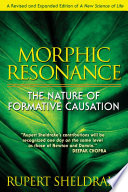
Other works by Rupert Sheldrake
More books by this author — not yet covered in our podcast catalog.