Authors & Guests / Rudyard Kipling
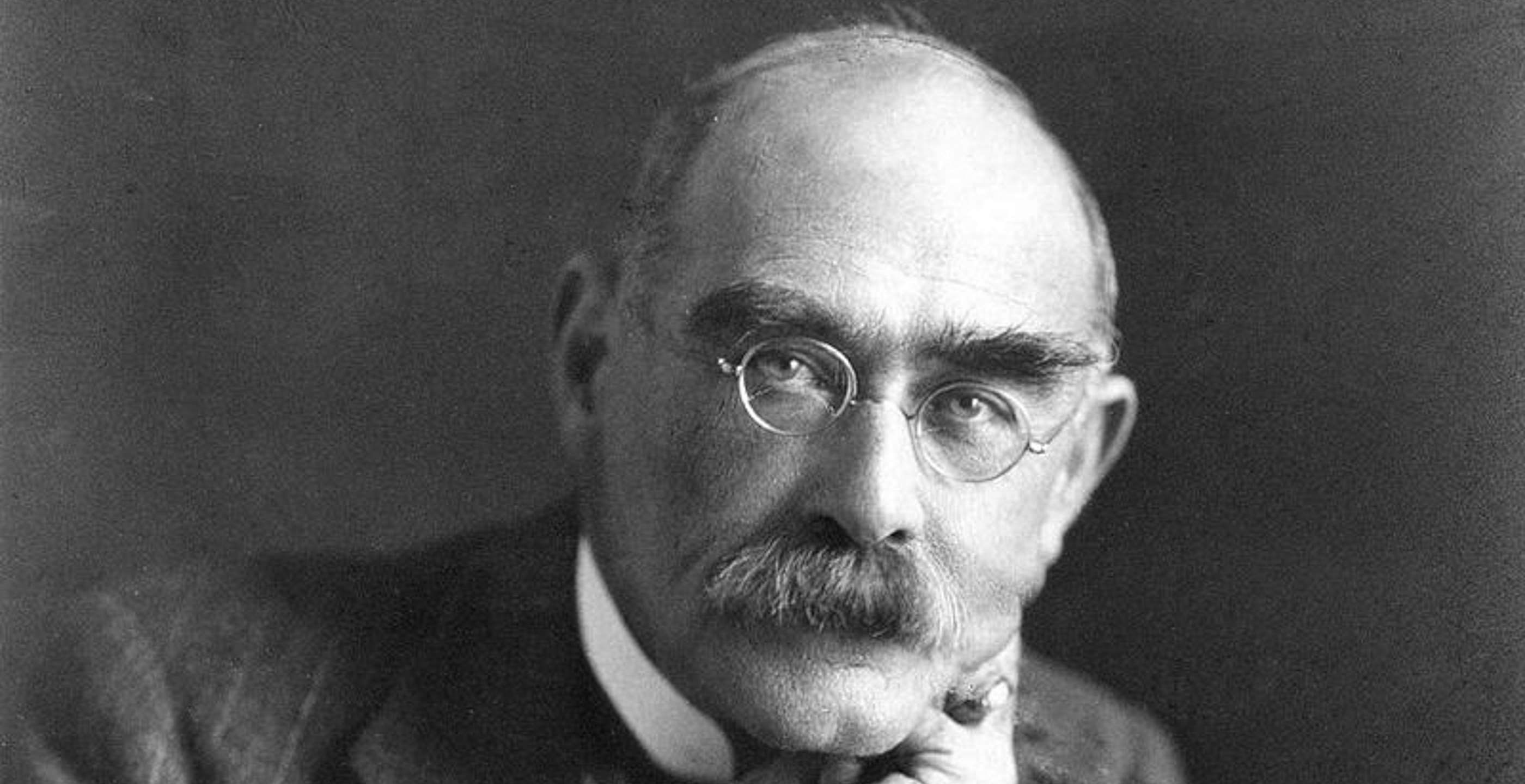
Rudyard Kipling
Rudyard Kipling (30 December 1865 – 18 January 1936) was an English poet, short-story writer, novelist, and journalist whose prolific output celebrated British imperial administration, the lives of soldiers and civilians in India, and children's adventures. He drew on his early years in Bombay and experiences in India and England to shape his characters and themes. Born to British parents—his father an artist and curator—Kipling spent his first six years in India before being sent to England for education, enduring a harsh foster home and later attending the United Services College, experiences that shaped his resilient protagonists and critiques of institutional cruelty. Returning to India at age 16, he worked as a journalist in Lahore, launching his literary career with Departmental Ditties (1886) and Plain Tales from the Hills (1888), which vividly captured Anglo-Indian society and earned rapid acclaim.
Kipling's major achievements include iconic children's books like The Jungle Book (1894) and Just So Stories (1902), the espionage novel Kim (1901) evoking India's cultural mosaic, and poems such as "If—" (1910) extolling stoic virtue, alongside ballads glorifying the common soldier in works like Barrack-Room Ballads (1892). In 1907, he received the Nobel Prize in Literature at age 41—the youngest recipient ever—for his observational power, imaginative originality, and narrative vigor, particularly as a bard of empire and its soldiery. His staunch imperialism, rooted in firsthand colonial service and evident in "The White Man's Burden" (1899) urging dutiful governance over subject peoples, positioned him as a defender of Britain's global order amid rising anti-imperial critiques, though his stories often humanized Indian figures and exposed bureaucratic failings. Later, Kipling endorsed Britain's World War I effort, suffering personal tragedy with his son's death at Loos, which deepened his martial themes while his legacy endures for literary craft over ideological disputes.
Joseph Rudyard Kipling was born on 30 December 1865 in Bombay, British India, to British parents John Lockwood Kipling and Alice MacDonald Kipling. His father, an artist, sculptor, and educator, had arrived in India shortly after marrying Alice in London earlier that year and took up a position teaching architectural sculpture, modeling, and ceramics at the Sir Jamsetjee Jeejeebhoy School of Art in Bombay.
Alice MacDonald Kipling, born in Sheffield, England, in 1837, hailed from a Methodist family with ties to the arts and literature; two of her sisters married notable figures in the Pre-Raphaelite circle, including Georgiana Macdonald to painter Edward Burne-Jones and Agnes to Edward Poynter. The couple's union reflected the era's pattern of British professionals seeking opportunities in the expanding colonial administration and educational institutions of India.
In 1868, the family welcomed a daughter, Alice Kipling —known as "Trix"—born on 11 June in the Bombay Presidency. John Lockwood Kipling's career progressed when, around 1871, he relocated the family to Lahore , where he became principal of the Mayo School of Arts and curator of the Lahore Museum, immersing the young Rudyard in Punjab's cultural and artistic environments during his early childhood. These years in India, marked by proximity to local artisans and traditions under British oversight, later influenced Kipling's writings evoking the subcontinent's landscapes and peoples.
In 1871, at the age of five, Kipling and his younger sister Alice ("Trix") were sent from Bombay to England for their education, a common practice among British families in India to provide formal schooling and acclimatization to British norms. They were placed under the care of Captain Pryse Agar Holloway and his wife Sarah in their home, Lorne Lodge, in Southsea near Portsmouth, where they remained for nearly six years until 1877.
Books by Rudyard Kipling

Other works by Rudyard Kipling
More books by this author — not yet covered in our podcast catalog.