Authors & Guests / Robert J. Groden
Robert J. Groden
Robert J. Groden (born November 22, 1945) is an American photographer, author, and researcher specializing in the analysis of visual evidence from the assassination of President John F. Kennedy on November 22, 1963. His work critiques the Warren Commission's lone gunman conclusion, highlighting photographic anomalies, film discrepancies, and indications of multiple shooters derived from trajectories and witness accounts captured in images.
Groden entered the public eye on March 6, 1975, by screening the uncut Zapruder film on the television program Good Night America , hosted by Geraldo Rivera , marking the first national broadcast of the unaltered footage and revealing the backward head snap of Kennedy, which he argues contradicts the official single-shooter narrative. As a staff photographer and consultant for the House Select Committee on Assassinations (1976–1979), he examined thousands of photographs and films, contributing expertise that informed the committee's acoustic analysis suggesting a probable conspiracy involving at least four shots.
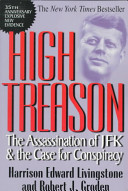
Groden has published several volumes compiling assassination imagery, including High Treason: The Assassination of President John F. Kennedy (1989, co-authored with Harrison Livingstone), The Killing of a President: The Complete Photographic Record of the JFK Assassination, the Conspiracy, and the Cover-Up (1993), and JFK: Absolute Proof (2013), which detail alleged evidence tampering and suppressed photos supporting a coordinated plot. His presentations, often in Dealey Plaza , have drawn both supporters seeking empirical reevaluation of the evidence and critics questioning the validity of certain image enhancements he promotes as proof of forgery.
Robert J. Groden was born on November 22, 1945, in Queens , New York City , New York. He grew up in New York City , where he developed a childhood passion for history and the technical processes of photography . No records indicate formal higher education in photography or related fields; Groden's expertise in photo analysis appears to have been self-developed through personal study and practical application beginning in his late teens.
Robert J. Groden, raised in New York City , demonstrated an early fascination with the technical aspects of photography beginning in childhood, around the age of 10 or 12, when he first engaged with photographic processes. This interest extended to the broader mechanics of image creation and development, laying the groundwork for his later expertise in photo analysis.
Complementing his photographic pursuits, Groden nurtured a parallel passion for history from a young age, reflecting a curiosity about historical events and documentation that aligned naturally with visual records. These dual interests in empirical visual evidence and historical inquiry would eventually converge, though they originated independently in his formative years.
Robert J. Groden, born November 22, 1945, cultivated his photo analysis capabilities through professional training in film optics alongside intensive scrutiny of John F. Kennedy assassination imagery beginning in his late teens. His entry into the field stemmed from technical roles in photographic reproduction, where he specialized in enlarging and enhancing 8mm films for commercial distribution at Manhattan Effects starting around 1969. This work demanded precision in optical printing, frame stabilization, and anomaly detection, skills directly transferable to forensic examination of historical footage.
Groden's pivotal advancement occurred via hands-on engagement with the Abraham Zapruder film, an 8mm recording of the 1963 assassination. In 1969, through connections from enlarging the Woodstock documentary, his employer acquired a print from Life magazine, which held exclusive rights; Groden then produced an unauthorized, high-fidelity copy using blow-up techniques to safeguard the original amid fears of tampering or loss.