Authors & Guests / Richard E. Nisbett

Richard E. Nisbett
Richard Eugene Nisbett (born June 1, 1941) is an American social psychologist renowned for his empirical investigations into the cultural determinants of cognition , human reasoning errors, and the environmental influences on intelligence .
Nisbett's research has demonstrated systematic differences in perceptual and inferential processes between Eastern and Western cultures, as detailed in his influential book The Geography of Thought: How Asians and Westerners Think Differently...and Why , which draws on cross-cultural experiments to argue that holistic versus analytic thinking styles arise from divergent socialization practices rather than innate predispositions. His collaborative work with Lee Ross , Human Inference: Strategies and Shortcomings of Social Judgment (1980), exposed common biases in causal attribution and statistical reasoning, foundational to understanding errors in everyday judgment.
A Theodore M. Newcomb Distinguished University Professor Emeritus at the University of Michigan , Nisbett has emphasized the modifiability of intelligence through education and socioeconomic interventions, contending in Intelligence and How to Get It that group differences in IQ are primarily environmental in origin—a position that has sparked debate given evidence from behavioral genetics highlighting substantial heritability within populations. He has received the American Psychological Association's Award for Distinguished Scientific Contributions, among other honors, for advancing social cognition and cultural psychology .
Richard E. Nisbett was born on June 1, 1941, in Littlefield, Texas , a small agricultural town in the West Texas plains with a population of around 6,000 at the time. He grew up in a family of modest means, the son of R. Wayne Nisbett, who worked in the insurance industry, and Helen King Nisbett. This rural Southern environment, marked by tight-knit communities and traditional social norms, characterized his early years, though Nisbett has described these beginnings as humble without detailing specific formative events in depth.
In his 2021 memoir Thinking: A Memoir , Nisbett offers only brief and somewhat evasive reflections on his pre-college life, transitioning quickly from high school experiences to academic pursuits, suggesting that profound intellectual influences emerged later rather than in childhood. No self-reported exposures to logical puzzles, philosophy , or systematic observations of reasoning failures—such as family disputes or local cultural practices—are prominently documented from this period, though the regional context of West Texas , with its emphasis on personal honor and interpersonal dynamics, may have implicitly shaped early social perceptions that informed his eventual focus on cultural cognition. His upbringing in this setting contrasted with the urban academic environments he later entered, potentially highlighting discrepancies in reasoning styles that became central to his research.
Richard E. Nisbett earned his A.B. in psychology from Tufts University in 1962.
He then completed his graduate training in social psychology at Columbia University , receiving his Ph.D. in 1966. His doctoral advisor was Stanley Schachter , renowned for experimental studies on social influence , emotional attribution, and cognitive labeling processes.
Nisbett's education under Schachter focused on rigorous experimental methodologies to examine how individuals perceive and attribute causes to social behaviors, fostering an empirical approach to understanding intuitive reasoning and decision-making biases. This foundation in causal inference and social cognition through controlled studies equipped him with tools for dissecting the psychological mechanisms underlying everyday judgments.
Following his PhD in social psychology from Columbia University in 1966, Nisbett served as an instructor and then assistant professor of psychology at Yale University from 1966 to 1971.
Books by Richard E. Nisbett
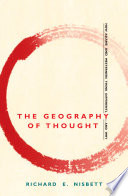
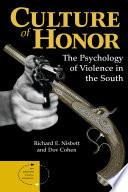
Other works by Richard E. Nisbett
More books by this author — not yet covered in our podcast catalog.