Authors & Guests / Ray Bradbury

Ray Bradbury
Ray Douglas Bradbury (August 22, 1920 – June 5, 2012) was an American author and screenwriter recognized for his contributions to speculative fiction through novels, short stories, and poetic explorations of human themes. Best known for the dystopian novel Fahrenheit 451 (1953), which depicts a society where books are systematically burned to suppress independent thought, and The Martian Chronicles (1950), a linked collection chronicling humanity's imagined settlement of Mars, Bradbury's works often merged science fiction with fantasy and horror elements. Largely self-taught after graduating high school in 1938, he produced over 30 books and approximately 600 short stories, alongside screenplays including the adaptation of Moby Dick (1956) and episodes for anthology series. His writing emphasized nostalgia , the consequences of technological distraction—particularly television's erosion of reading habits, as he clarified regarding Fahrenheit 451 —and the enduring value of imagination amid conformity. Among his honors were the National Medal of Arts (2004), a Pulitzer Prize Special Citation (2007) for lifetime achievement, and designation as a Grand Master by the Science Fiction and Fantasy Writers of America.
Ray Bradbury was born Ray Douglas Bradbury on August 22, 1920, in Waukegan, Illinois , to Leonard Spaulding Bradbury, a lineman for power and telephone companies, and Esther Marie Moberg Bradbury, a Swedish immigrant born in 1888 whose family had settled in the United States shortly after her birth. The Bradbury family's presence in Waukegan dated to 1847, when his paternal great-grandfather, Samuel I. Bradbury, relocated there from New England .
His parents had four children: twin sons Leonard and Samuel in 1916, Bradbury himself in 1920, and a daughter, Elizabeth, in 1926. Samuel died at age two, likely from illness, and Elizabeth succumbed to pneumonia around age one when Bradbury was seven, leaving him as the primary surviving sibling amid these early family losses.
Bradbury's childhood involved frequent relocations driven by his father's intermittent unemployment during the economic instability of the 1920s and early 1930s. The family moved temporarily to Tucson, Arizona , in 1926–1927 and again in 1932–1933 to pursue employment opportunities for Leonard, returning to Waukegan after each stint. In 1934, amid the Great Depression , they relocated permanently to Los Angeles , California , when Bradbury was 14, seeking steadier work and better prospects. These moves exposed him to varied Midwestern and Southwestern environments during his formative years.
Bradbury's early years in Waukegan, Illinois , were marked by immersion in a small-town environment that fueled his fascination with the fantastical and the eerie. Born on August 22, 1920, he explored local parks, attended the opening of the Genesee Theater in 1927 featuring Al Jolson in The Jazz Singer , and frequented the public library, where he devoured works by Edgar Allan Poe and Nathaniel Hawthorne . These experiences, combined with exposure to horror films, fairy tales, and traveling carnivals, instilled a sense of wonder and melancholy that later permeated his depictions of Midwestern life, transmuted into the fictional Green Town in stories like Dandelion Wine .
A pivotal moment occurred in 1932, at age 12, during Labor Day weekend in Waukegan, when Bradbury encountered the carnival performer known as Mr. Electrico. Seated in an electric chair and demonstrating shocks with a battery-powered sword , the performer "knighted" Bradbury amid sparks, repeatedly urging him to "Live forever!" This encounter, which Bradbury later described as transformative, ignited his resolve to become a writer , equating storytelling with immortality and drawing from the carnival's blend of spectacle and mortality.
In 1934, economic pressures prompted Bradbury's family to relocate to Los Angeles , California , where his father secured steady employment.
Books by Ray Bradbury
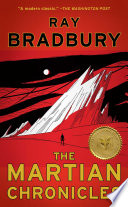
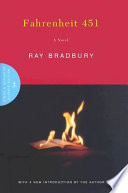
Other works by Ray Bradbury
More books by this author — not yet covered in our podcast catalog.