Authors & Guests / Rachel Carson

Rachel Carson
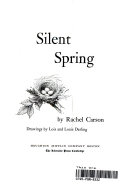
Rachel Louise Carson (May 27, 1907 – April 14, 1964) was an American marine biologist and author whose popular books on ocean life, including The Sea Around Us (1951), brought scientific insights into marine ecosystems to a wide audience, while her 1962 book Silent Spring warned of the ecological harms from indiscriminate use of synthetic pesticides like DDT , catalyzing the modern environmental movement and influencing the creation of the U.S. Environmental Protection Agency in 1970 and the 1972 DDT ban. Her work employed detailed empirical observations to highlight bioaccumulation and unintended consequences of chemical interventions, yet it faced scientific scrutiny for overstating certain risks—such as unsubstantiated claims of DDT causing cancer or widespread bird extinctions—and for downplaying the pesticide's proven efficacy in eradicating typhus and malaria , which had saved millions of lives prior to restrictions inspired by her advocacy. Critics contend that the resulting global aversion to DDT contributed to malaria resurgence, with estimates of excess deaths in the tens of millions in affected regions, underscoring tensions between ecological preservation and human health imperatives. Carson's legacy thus embodies both pioneering causal analysis of environmental chains and cautionary examples of policy driven more by alarm than comprehensive evidence.
Rachel Carson was born on May 27, 1907, on a 65-acre farm near Springdale, Pennsylvania , in the Allegheny Valley region north of Pittsburgh . She was the youngest of three children born to Robert Warden Carson, an insurance salesman originally from Pennsylvania , and Maria Frazier McLean Carson, a former schoolteacher from a Scottish Presbyterian family in Pennsylvania . The Carson family lived in a rural setting along the Allegheny River , where the homestead provided direct exposure to woodlands, fields, and waterways that shaped Carson's early fascination with the natural world.
Carson's older siblings included sister Marian, born around 1897, and brother Robert , born around 1899, both of whom were significantly older and pursued independent paths as adults. The family's modest circumstances and rural isolation limited formal social interactions, but the environment fostered self-directed exploration; Carson spent much of her childhood observing wildlife , collecting specimens, and roaming the farm's environs. Her father, while supportive of the family's move from urban Pittsburgh suburbs to the farm in 1899 for a healthier lifestyle , played a lesser role in her intellectual development compared to the household's domestic focus.
Maria McLean Carson exerted the most profound influence on her daughter's formative years, imparting a deep appreciation for literature and the intricacies of local flora and fauna through guided study using resources like Anna Botsford Comstock's Handbook of Nature Study . As a teacher who prioritized homeschooling elements over public schooling, Maria encouraged Carson's precocious writing talent, leading to her first publications in children's magazines such as St. Nicholas by age ten or eleven. This maternal emphasis on observation, reading, and creative expression—rooted in Maria's own unfulfilled aspirations amid a reportedly strained marriage —laid the groundwork for Carson's lifelong integration of scientific inquiry with literary prose.
Carson enrolled at Pennsylvania College for Women (now Chatham University ) in Pittsburgh in 1925, initially majoring in English with aspirations of becoming a writer . During her studies, she was inspired by a biology professor to switch her major to zoology , reflecting an emerging interest in scientific inquiry over literary pursuits alone. She graduated magna cum laude in 1929 with a Bachelor of Arts degree in zoology.
Books by Rachel Carson
Other works by Rachel Carson
More books by this author — not yet covered in our podcast catalog.