Authors & Guests / Norbert Elias

Norbert Elias
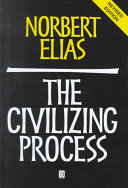
Norbert Elias (22 June 1897 – 1 August 1990) was a German-born sociologist of Jewish descent who developed process sociology, emphasizing long-term social interdependencies and figurational dynamics over static structures. His seminal work, The Civilizing Process (1939), analyzed the historical transformation of manners, self-restraint, and emotional controls in Western Europe as outcomes of state centralization, monopolization of violence, and lengthening chains of interdependence, rather than moral progress or individual agency alone.
Born in Breslau (now Wrocław, Poland) to a Jewish family, Elias initially studied medicine before shifting to philosophy and psychology , earning a doctorate in 1924 under Alfred von Martin, followed by sociological training under Karl Mannheim in Frankfurt . Forced to emigrate due to Nazi persecution in 1935, he settled in England , where academic recognition eluded him for decades; he worked in non-academic roles, conducted research in Africa , and only gained prominence after republishing The Civilizing Process in the late 1960s. Key later contributions included The Court Society (1969), exploring absolutist power figurations, and concepts like the balance of power in international relations and the sociology of knowledge , underscoring his rejection of homo clausus—the isolated individual—in favor of relational, processual human existence. Elias's framework influenced fields from historical sociology to sports studies, highlighting how unplanned figurational shifts drive civilizing and decivilizing trends, with empirical grounding in etiquette manuals, violence statistics, and court dynamics.
Norbert Elias was born on June 22, 1897 , in Breslau, Silesia Province, Prussia (now Wrocław , Poland ), to a middle-class Jewish family of assimilated German-speaking merchants. His father, Hermann Elias (1860–1940), operated a successful textile manufacturing and export business, embodying the entrepreneurial spirit of the era's Jewish bourgeoisie, while his mother, Sophie (née Gallewski), managed the household and pursued interests in music and literature, fostering a culturally enriched environment. This upbringing exposed Elias to both practical commerce and intellectual pursuits, amid the vibrant yet precarious Jewish community in pre-World War I Breslau.
In 1913, at age 16, Elias enrolled at the University of Breslau to study medicine, per his father's wishes for a stable profession, but his coursework was halted in 1914 by the outbreak of World War I , during which he served as a medical orderly on the Eastern Front. Resuming studies postwar, he pivoted toward philosophy, attending lectures by Richard Hönigswald at Breslau and engaging with phenomenological ideas through brief stints at Freiburg and Heidelberg , where he encountered Edmund Husserl , Heinrich Rickert , and Karl Jaspers . This period marked his shift from biological sciences to epistemological and historical inquiries, influenced by the neo-Kantian and phenomenological currents prevalent in German academia.
Elias earned his philosophy doctorate from the University of Breslau in 1924 under Hönigswald's supervision, with a dissertation titled Das Erkenntnisproblem in der Philosophie des Descartes ("The Problem of Knowledge in Descartes' Philosophy"), which critiqued epistemological foundations and resisted relativistic trends in contemporary thought by emphasizing rational certainty. In the mid-1920s, he joined Karl Mannheim's sociological circle in Heidelberg and later Frankfurt, where discussions centered on integrating historical processes into sociology, diverging from orthodox Marxism's economic determinism toward a more dynamic, relational analysis of social knowledge. These early associations honed Elias's aversion to abstract, timeless theorizing, grounding his thought in empirical historical sequences.
Books by Norbert Elias
Other works by Norbert Elias
More books by this author — not yet covered in our podcast catalog.