Authors & Guests / Noam Chomsky

Noam Chomsky
Avram Noam Chomsky (born December 7, 1928) is an American linguist, philosopher, cognitive scientist , historian , and political activist whose work has profoundly shaped multiple fields. A pioneer in theoretical linguistics , he introduced generative grammar in his 1957 book Syntactic Structures , proposing that human languages share an innate universal structure enabling rapid acquisition by children, countering behaviorist views dominant at the time. Chomsky also developed the Chomsky hierarchy , classifying formal grammars by generative power, which influenced computer science and formal language theory.
As Institute Professor Emeritus at the Massachusetts Institute of Technology (MIT), where he has taught since 1955, Chomsky earned his Ph.D. from the University of Pennsylvania in 1955 and conducted foundational research on syntax and semantics. His linguistic theories, emphasizing an autonomous syntactic component independent of semantics or pragmatics , sparked the cognitive revolution in the social sciences, impacting psychology , philosophy of mind , and artificial intelligence .
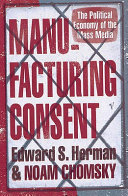
In political writings and activism, Chomsky identifies as an anarcho-syndicalist, advocating worker self-management and criticizing state capitalism , imperialism , and media propaganda —concepts detailed in works like Manufacturing Consent (1988) co-authored with Edward S. Herman , which argues Western media serve elite interests through filters like ownership and sourcing. His analyses of U.S. foreign policy, including interventions in Vietnam , Latin America , and the Middle East , portray systemic power pursuits often masked as humanitarianism, though critics contend he selectively minimizes leftist regime atrocities, as in initial skepticism toward Cambodian Khmer Rouge death toll estimates. Such positions have fueled debates on his influence, with admirers praising empirical dissection of propaganda models and detractors highlighting perceived ideological blind spots.
Avram Noam Chomsky was born on December 7, 1928, in the East Oak Lane neighborhood of Philadelphia, Pennsylvania, to Ashkenazi Jewish immigrant parents. His father, Zev William Chomsky, was a Hebrew scholar and educator who emigrated from Ukraine in 1913 and specialized in Hebrew grammar and linguistics, authoring works on the subject. His mother, Elsie Simonofsky Chomsky, was a teacher of Hebrew who had immigrated from Belarus; both parents emphasized education, intellectual debate, and Hebrew language proficiency in the household, exposing Chomsky to scholarly discussions from a young age. The family, middle-class but affected by the Great Depression, included a younger brother, David, and Chomsky witnessed economic hardships firsthand, including police violence against striking textile workers near his home.
Chomsky attended Oak Lane Country Day School, an experimental elementary institution modeled on progressive educational principles that encouraged independent inquiry and self-directed learning rather than rote memorization. He later transferred to Central High School of Philadelphia , a public magnet school known for its rigorous academic curriculum, where he graduated in 1945. At home, his father's expertise in Hebrew linguistics provided early immersion in language structure and analysis , fostering Chomsky's nascent interest in formal systems of grammar ; by adolescence , he had acquired functional proficiency in Hebrew through family resources and community involvement.
Politically aware amid the economic turmoil of the 1930s , Chomsky developed leftist inclinations early, influenced by observations of labor unrest and inequality during the Depression.